
UK to move to annual renewables auctions from next year
With solar readmitted to the process for subsidizing new renewable energy generation capacity, the government says it is “hitting the accelerator” on clean power as it aims for a fully decarbonized electricity system by 2035.
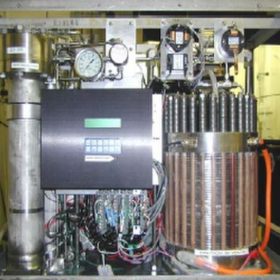
Hydrogen under $3/kg may ensure affordable seasonal energy storage in the US
Researchers from the United States have investigated how fuel cells and electrolyzers may be able to operate under intermittent availability provided by both wind and solar and have found that an affordable hydrogen-based system for seasonal energy storage could be achieved at a hydrogen price lower than $3, produced from inexpensive renewable electricity at $0.02/kWh.
Water-based electrolyzer for green hydrogen production
Verdagy has secured a $25 million investment for its new electrolyzer technology, which provides hydrogen fuel for heavy industrial applications. The membrane-based technology uses large active area cells, high current densities, and broad operating ranges to deliver hydrogen at scale.
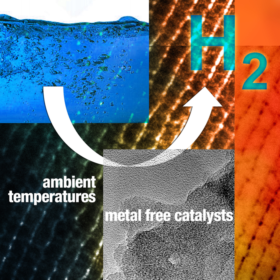
The Hydrogen Stream: New dehydrogenation process to improve hydrogen storage
The U.S. Department of Energy’s Ames Laboratory launched a new catalyst based on nitrogen and carbon to extract hydrogen from hydrogen storage materials at mild temperatures and under normal atmospheric conditions. Furthermore, South African President Cyril Ramaphosa said that the country is working on attracting new investments in electric vehicles and hydrogen and Norwegian consultancy and classification society DNV launched, together with 18 industry partners, a new Joint Industry Project (JIP) to enhance the standardization for hydrogen production systems that use renewable energy-powered electrolysis to produce green hydrogen.
‘Solar and wind deployment could not now be stopped if we wanted to’
BloombergNEF’s Jenny Chase has surveyed the state of affairs in world solar for clean energy journal Joule and said the technology’s historic ability to surmount obstacles – and persistently confound analysts’ predictions – should offer a reason for hope.
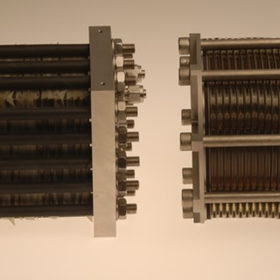
Large scale alkaline electrolyzers may be built at €444/kW in 2030
Researchers at Germany’s Fraunhofer ISE have estimated the costs for both alkaline (AEL) and proton exchange membrane (PEM) electrolyzers and have found that AEL systems have bigger margins for cost reduction. According to their calculations, the costs of a large scale AEL electrolyzer with a capacity of 100MW should drop from €663/kW in 2020 to €444 in 2030.
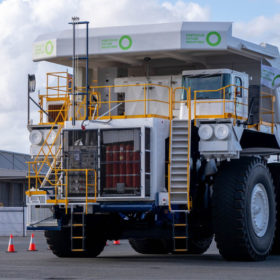
The Hydrogen Stream: Fortescue develops tech based on photocatalytic water splitting coupled with solar
Australia’s Fortescue Future Industries wants to develop a green hydrogen technology based on photocatalytic water splitting coupled with solar radiation. Elsewhere, Linde has signed a long-term agreement with German chemical company BASF for the supply of hydrogen and steam in France and Nel has received a contract for a containerized PEM electrolyzer and light-duty hydrogen fueling station package from an unnamed U.S. power utility.
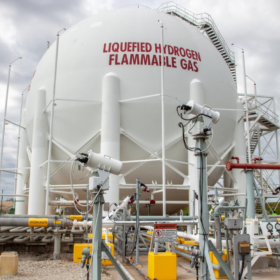
Large-scale storage options for compressed hydrogen
Researchers from Finland and Sweden have reviewed different ways to store compressed gaseous hydrogen, including storage vessels, geological storage, and other underground options.
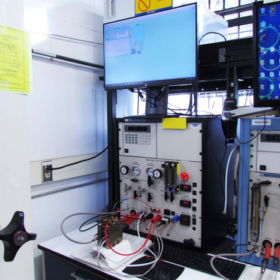
The Hydrogen Stream: New fuel cell design to solve longstanding problem of overheating
Los Alamos National Laboratory researchers developed a new polymer fuel cell that is claimed to solve the long-known issue of overheating. Furthermore, Mexican cement producer Cemex invested in HiiROC, a UK-based hydrogen production startup, which developed a scalable technology that uses thermal plasma electrolysis to convert biomethane, flare gas, or natural gas into hydrogen at a reportedly lower cost than competing solutions.
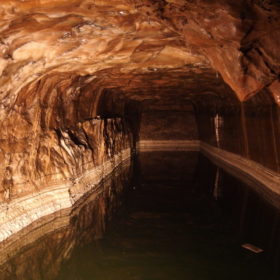
Natural hydrogen exploration ‘boom’ snaps up one third of South Australia
South Australia has found itself at the heart of a 21st-century gold rush, though this time for naturally occurring hydrogen. Since February 2021, 18 exploration licenses have been granted or applied for in the state by six different companies searching for natural hydrogen.
