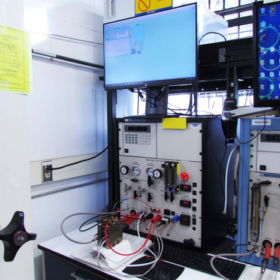
The Hydrogen Stream: New fuel cell design to solve longstanding problem of overheating
Los Alamos National Laboratory researchers developed a new polymer fuel cell that is claimed to solve the long-known issue of overheating. Furthermore, Mexican cement producer Cemex invested in HiiROC, a UK-based hydrogen production startup, which developed a scalable technology that uses thermal plasma electrolysis to convert biomethane, flare gas, or natural gas into hydrogen at a reportedly lower cost than competing solutions.
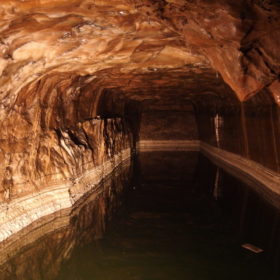
Natural hydrogen exploration ‘boom’ snaps up one third of South Australia
South Australia has found itself at the heart of a 21st-century gold rush, though this time for naturally occurring hydrogen. Since February 2021, 18 exploration licenses have been granted or applied for in the state by six different companies searching for natural hydrogen.
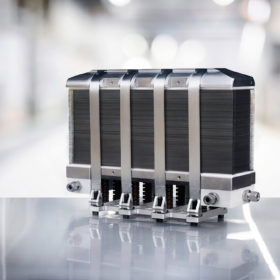
The Hydrogen Stream: Novel fuel cell tech based on liquid-organic hydrogen carrier
Germany’s Schaeffler is developing a hydrogen fuel cell that runs on a liquid organic hydrogen carrier, and Australia’s H2X Global has formed a joint venture with Indian automotive components manufacturer Advik Hi-Tech to manufacture hydrogen fuel cells, generators and vehicles.
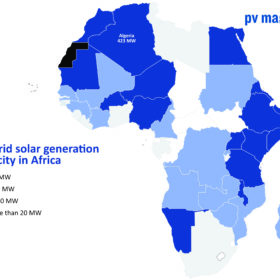
Botswana-Namibia green hydrogen project expands to 5GW
The raised ambition of an already huge renewables-powered hydrogen project in the Southern African nations vividly demonstrates the hydrogen and clean energy potential of a continent which accounted for just 0.5% of the world’s new solar capacity last year, according to trade body AFSIA’s annual report.
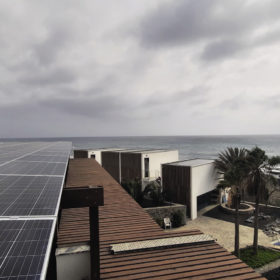
The weekend read: Overcoming the water challenge of green hydrogen production
Once thought of in a niche sense, the solar-water nexus is a rapidly expanding network of applications. They include practical tools capable of solving persistent issues like water scarcity, as well as newly pressing issues like overcoming the water challenge of green hydrogen production. Blake Matich looks at such applications here in Australia and abroad.
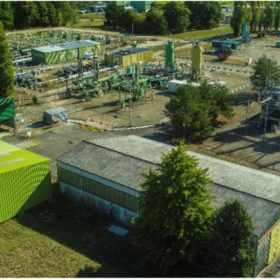
The Hydrogen Stream: Underground hydrogen storage for 1 MW electrolyzer in France
Elsewhere, several hydrogen projects were announced in Norway, Germany, India, China and the UK. Royal Dutch Shell started operations at the power-to-hydrogen electrolyzer in China and Germany’s Linde Engineering signed a contract for the construction a green hydrogen demonstration plant in Norway. Furthermore, Green Hydrogen Systems signed a supply agreement with Edinburgh-based Logan Energy to deliver electrolysis equipment for a project in England.
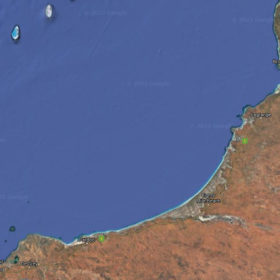
Singapore sovereign wealth fund backs Australian green hydrogen developer
The InterContinental Energy company behind two proposed green hydrogen megaprojects in Western Australia – the 26GW Asian Renewable Energy Hub and the 50GW Western Green Energy Hub – has received the backing of Singapore’s US$744 billion sovereign wealth fund GIC.
Long-distance hydrogen interconnectors from an LCOE/LCOS perspective
New research from the U.K. shows the increasing competitiveness of long-distance hydrogen interconnectors over the next three decades. Compared to high-voltage electricity cables, hydrogen interconnectors may soon achieve a much lower levelized cost of storage and their ability to further reduce the final LCOE will depend on how much electrolyzer costs will reduce over the years.
The Hydrogen Stream: Electrolyzer sales expected to quadruple this year
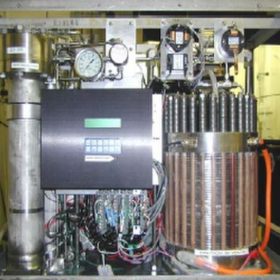
According to BloombergNEF, electrolyzer shipments may reach up to 2.5GW in 2022, up significantly from 458MW last year. China and the United States will become the world’s first and second markets, respectively.
The Hydrogen Stream: World’s first full-scale pilot plant for extracting hydrogen from natural gas pipeline
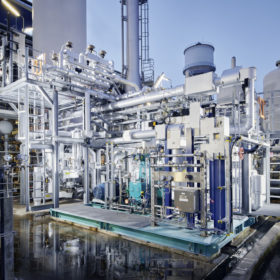
Germany-based Linde Engineering has started up a full-scale pilot plant in Dormagen to showcase how hydrogen can be separated from natural gas streams using its membrane technology. Furthermore, Abu Dhabi-based renewable energy developer Masdar has teamed up with French energy giants Engie and Totalenergies on two separate hydrogen projects and Sweden’s nuclear power company OKG signed its first contract with an external buyer to enter the hydrogen market as a producer and supplier.
