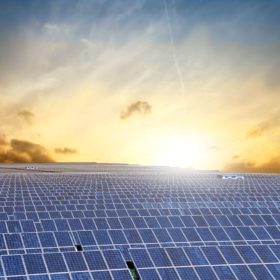
Solar PV driving green hydrogen to undercut gas, says BloombergNEF
BloombergNEF has shown that solar PV is the key driver of declining green hydrogen costs. The forecast shows costs falling by 85% by 2050, undercutting natural gas and blue and gray hydrogen production.
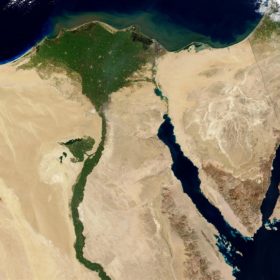
Egyptian government signs deal to buy power from 200 MW of Kom Ombo project
Saudi power company ACWA Power today revealed it has signed a 25-year power purchase agreement with the Egyptian Electricity Transmission Company and said development was on track for generation to start before October next year.
Chinese PV Industry Brief: Longi expands into hydrogen, Eging PV secures 280 MW order
Monocrystalline module manufacturer Longi is venturing into new territory but missed out to its rival on two big panel orders from a state-owned power company.
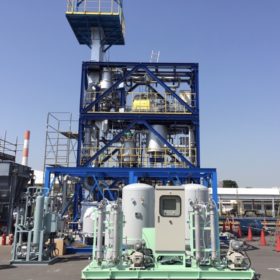
The Hydrogen Stream: Projects move forward in China, Japan, Australia and across several European countries
Sinopec wants to build 1,000 hydrogen refueling stations by 2025. Ways2H is building a facility in the Tokyo area that will convert daily 1 ton of dried sewage sludge into 40-50 kilograms of hydrogen for fuel cell mobility and power generation. Ørsted wants to deploy two renewable hydrogen production facilities for a total of 1 GW by 2030. Wacker Chemie is planning to produce green hydrogen and renewable methanol at its German site.
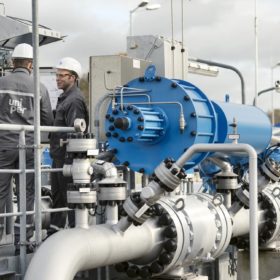
What will African nations require to produce competitive green hydrogen exports?
A robust national strategy, a portfolio of renewable energy assets, public subsidies and, ideally, existing gas pipelines will all favor African nations aiming to become exporters in the energy storage medium, participants heard at a recent two-day green hydrogen conference.
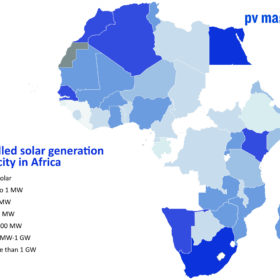
African green hydrogen could feed German and Japanese industry and water drought-stricken nations
Trade bodies the Africa Solar Industry Association and the African Hydrogen Partnership hosted a two-day virtual conference to discuss the role green hydrogen can play in economic growth across the continent–and how it could drive desalination in freshwater-starved coastal countries.
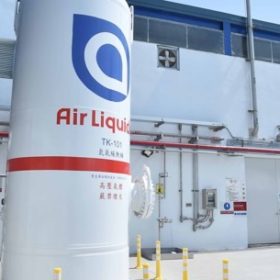
The Hydrogen Stream: Siemens targets $1.50/kg by 2025, BP and Saudi Aramco bet on blue hydrogen
The German company expects to roll out its in-house proton exchange membrane (PEM) electrolysis technology to implement a gigawatt production of electrolyzers. BP partners with UK gas distributor Northern Gas Networks (NGN) to develop blue hydrogen and Saudi Aramco teams up with Hyundai Heavy Industries to do the same. Italy’s Snam wants to build hydrogen projects in the United Arab Emirates.
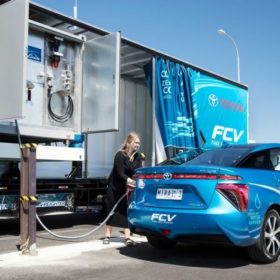
Australia’s first hydrogen refueling station opens in Canberra
Neoen and ActewAGL have opened Australia’s first hydrogen vehicle-refueling station in Canberra. It will cater to the state government’s new fleet of Hyundai Nexo hydrogen cars.
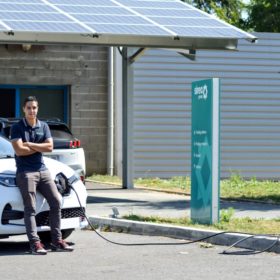
EV recharging station powered by solar, hydrogen
The recharging station was designed by French automation group Sirea. It is powered by a solar carport and a small electrolyzer.
Incentives crucial to avoid green, blue, and even purple hydrogen fading to grey
An Anglo-German report has suggested the environmentally-friendly desire to use only clean power to produce hydrogen, outlined by nations such as Germany, could end up being more emissions-heavy than the more pragmatic embrace of blue hydrogen under consideration in the U.K.
