
The PV world ten years ago – summer series part II
pv magazine editor Pilar Sánchez Molina recalls news from the PV sector of ten years ago as part of a new series. The insights offered will not only bring back memories for the pioneers of that exciting, challenging period but may also offer an idea of where we could be in 2030.

H1 2018 Inverter shipments: Utility-scale growth and China 31/5 fall-out
The global top three companies have not changed compared to the 2017 ranking. Still in the U.S., SMA has lost its pole position to Solaredge. Ingeteam, meanwhile, is capitalizing massively on stable growth in the utility-scale market, and jumps from rank 18 to fourth.
PV demand, changing auctions and price declines – GTM lays out its latest predictions
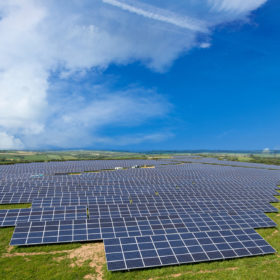
An uptick in global PV demand will occur in 2020, with China’s 30.5 policy directly affecting 2018’s results by around 18%, says GTM Research. Rapidly falling module prices will benefit predominantly Asian markets, where modules comprise the lion’s share of capex, although regions like Europe will see increased installations. Laying out 10 PV predictions, it anticipates, among others, intensified competition, lower bid prices, more technology neutral auctions and an increasing amount of subsidy free solar.
Huawei cites IP track record in response to SolarEdge complaint
Huawei spoke to pv magazine in response to the latest allegations made by SolarEdge regarding the latter’s allegedly infringed intellectual property. Huawei is adamant it is one of the world’s largest owners of intellectual property rights and fully supports the protection of IP. The Chinese manufacturer denies the claims made by SolarEdge and points to its extensive IP and research and development (R&D) efforts to support its defense.
EV charging infrastructure market to reach $18 billion by 2030
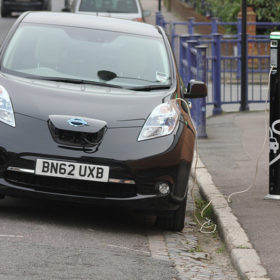
EV charging infrastructure is set to become a major market, and actors from different sectors like municipal utilities, inverter companies and storage system providers are getting creative, and collaborative, in order to secure a slice of the cake.
US: Mixed impact of proposed Section 301 tariffs on inverter makers
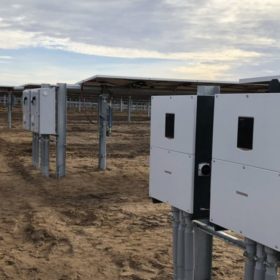
GTM Research says the 10% tariffs that the Trump Administration is calling for are “significant”, and some companies and sectors will be affected more than others.
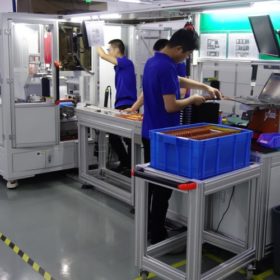
RCT Power announces battery plant in eastern China
Germany’s RCT Power will start manufacturing lithium-ion-phosphate battery storage modules in eastern China this week. The fully automated facility in Suzhou, Jiangsu province, has an initial annual production capacity of 18,000 units.
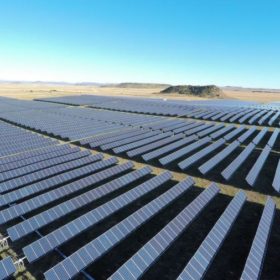
Scatec wants to double size of project pipeline
Chief executive of Norwegian developer tells markets his company will deliver on 1.5 GW promise by the end of the year – by including any projects it has broken ground on.
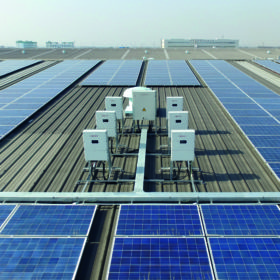
Global inverter shipments to grow just 2% in 2018
Global solar PV inverter shipment are expected to increase just 2% this year, to just over 100 GWac, GTM Research’s Scott Moskowitz tells pv magazine. He further reveals that Huawei knocked SMA off the top revenue spot in 2017, for the first time.
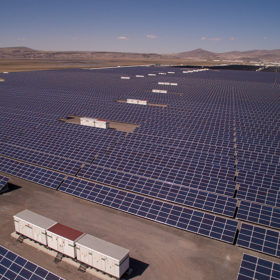
Record inverter shipments in 2017, three-phase string inverters overtake central for first time
According to the latest GTM Research statistics, global inverter shipments increased 23% in 2017, and revenues 11%, thus representing another record year. A market first, three-phase string inverter shipments overtook those of central inverters.
