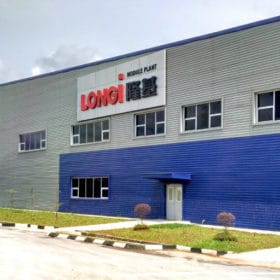
Longi’s 5 GW high-efficiency mono PERC factory will be at full capacity ‘soon’
The Chinese panel maker is already producing bifacial half cut modules at its new Anhui fab after the completion of an initial 2.5 GW phase of operations. And the company president confirmed Longi is on track for 45 GW of mono wafer and ingot production capacity next year.
REC Group reacts to Hanwha Q Cells lawsuit, says legal action in Germany not started yet
The Norwegian manufacturer said Hanwha Q Cells’ legal action in Germany has not started yet, and it will take all necessary steps to defend itself against patent infringement allegations.
Longi rejects Hanwha Q Cells allegations and provides details on patent issue
The Chinese monocrystalline module maker said it had not been notified of the legal action by its Korean rival. Longi claimed there is considerable uncertainty over the validity of the patents at the root of the lawsuits, which the Chinese defendant says relate to ALD technology. Longi says it uses PECVD technology for cell production.
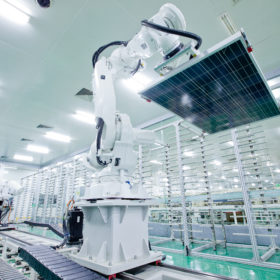
Jinko says Hanwha Q Cells lawsuits are without technical or legal merit
The Chinese module maker “categorically refutes” allegations made by its rival that it is using Hanwha’s passivation technology on its solar cells. Jinko added, it does not expect any disruption to normal operations as a result of the lawsuit.
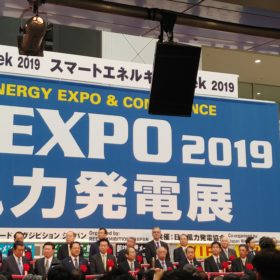
Smart Energy Week in Tokyo: Self-consumption, storage and a plentiful pipeline for now
Though we’re unlikely to see a return to the days of double-figure GW annual installation levels, Japan will stay at the top table of solar. Last week, pv magazine visited PV Expo Japan, part of Tokyo’s World Smart Energy Week, and found plenty of market developments to discuss, along with healthy interest from major players.
Hanwha Q-Cells sues Jinko, Longi and REC for patent infringement
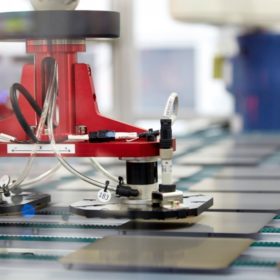
The Korean solar manufacturer has lodged a patent infringement lawsuit against Jinko and REC in Germany, and two more against the same companies plus Longi in the U.S. Hanwha Q Cells claims its three rivals have used its patented solar cell passivation technology to increase the performance of their products.

Hanwha 1.7 GW panel factory is the second US fab to come online this week
Hanwha Q Cells has begun shipping solar panels from its 1.7 GW factory near the Georgia-Tennessee border. The huge facility is the second major U.S. module factory to announce production this week.
1366 Technologies and Hanwha Q Cells to open wafer factory in Malaysia
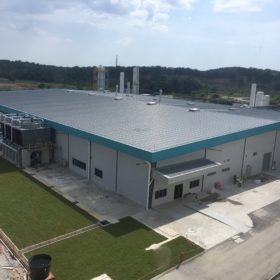
The U.S. wafer maker and the Korean module manufacturer expect to ramp the Malaysian factory no later than September. The fab is next to Hanwha’s existing cell and module facilities and 1366 Technologies plans to produce its Direct Wafers on a gigawatt scale for less than $0.20 per piece.
Lyon’s BePositive event shows confidence in French PV market remains strong
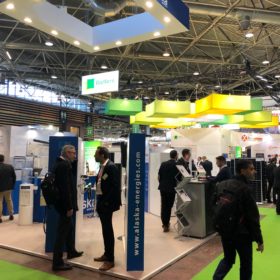
The solar event in Lyon illustrated how expectations of French solar remain big despite lower-than-expected development and issues related to regulations and carbon footprint requirements. The large participation of international and Chinese players seeking business among installers and distributors is a signal things may improve in the short term, and larger volumes may be deployed in the coming years.

Turkey’s 1 GW Konya project in doubt
Project partners Hanwha Q Cells and local company Kalyon Enerji appear to have ended their partnership and to be negotiating the terms of a ‘divorce’.
