
Octopus Energy Group receives $800 million investment
British renewable energy company Octopus Energy Group announced it would use a recent $800 million investment to “drive real scale” of heat pump manufacture and installation, and create 3,000 new jobs.
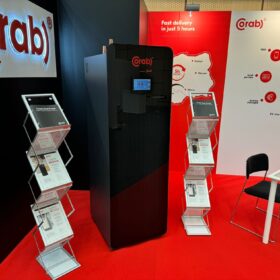
Corab debuts residential brine-water heat pump
Polish manufacturer Corab has developed a new ground-source heat pump with several components supplied by Denmark’s Danfoss. It offers 8 kW to 16 kW of rated thermal power.

Canadian startup unveils residential air source heat pump for cold climates
Terravis Energy said its heat pump prototype uses difluoromethane (R32) as the refrigerant and has a seasonal coefficient of performance (SCOP) of approximately 3.0 under Ontario’s environmental conditions.

Geothermal heat pumps to decarbonize buildings
The mass adoption of geothermal heat pumps could decarbonize buildings and reduce grid transmission needs, according to a report by Oak Ridge National Laboratory and the US National Renewable Energy Laboratory (NREL).
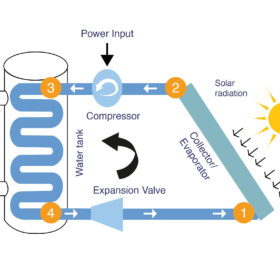
New solar-air dual-source heat pump design based on blower fans
Scientists have utilized two blower fans with two roll-bonded bare plates to create a heat pump that can operate in variety of ambient temperature and solar radiation conditions. The system has an average daily coefficient of performance of 3.24.
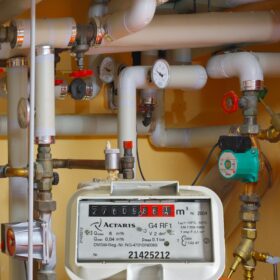
EU likely to phase out fossil fuel-powered boilers by 2040
The European Parliament and European Council yesterday provisionally agreed to phase out fossil-fuel boilers in the next two decades, among a raft of other infrastructure recommendations aiming to boost infrastructure energy efficiency. Europe’s peak body for heat pumps, the European Heat Pump Association (EHPA), welcomes the news.

Four ways heat pumps can assist the world’s energy transition
From using heat pumps in decommissioned power plants, to utilizing them for storage and carbon capture – scientists from China have listed the ways in which heat pumps can help the global energy transition move forward. They showed that their potential is beyond heat electrification.

New air-to-water heat pumps from Italy
Italian manufacturer Thermocold is offering new heat pumps with output ranging from 8 kW to 30 kW. They use propane as the refrigerant and reportedly have a seasonal coefficient of performance of up to 4.5.

New model to predict defrost cycles, behavior of air-sourced heat pumps in cold weather
UK-based researchers have developed a novel method to estimate the amount of defrost cycles a heat pump will experience in the winter and how much energy it would require to implement the cycles. The results of their simulation showed a strong relationship between the number of defrost cycles and the ambient temperature.
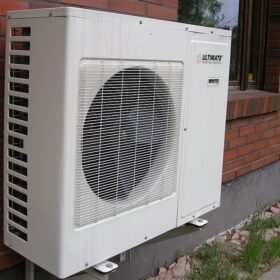
Up to 1,150 families sign up for UK heat pump scheme
The UK Department for Energy Security and Net Zero says the latest round for its Boiler Upgrade Scheme – an initiative awarding GBP 7,500 ($9,500) to families in England and Wales to replace traditional boilers for heat pumps – “surged” with a threefold increase in applications.
