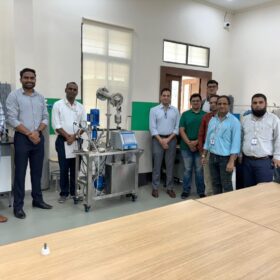
Indian researchers develop stable liquid hydrogen transport system
Researchers at MIT World Peace University (MIT-WPU) in India have developed a liquid organic hydrogen carrier (LOHC) system that enables hydrogen to be transported in a stable liquid form. The system is non-flammable, non-explosive, and can be handled at normal temperatures and pressures.
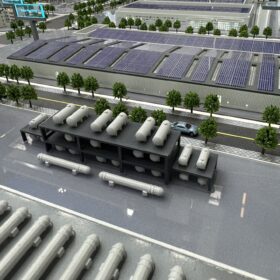
Green hydrogen remains ‘prohibitively’ expensive in Africa
A European research team has assessed the levelized cost of hydrogen across 31 African countries and has concluded that importing green hydrogen from Africa to European is economically unfeasible by 2030, with prices ranging from $10.2/kg to $3.8/kg.
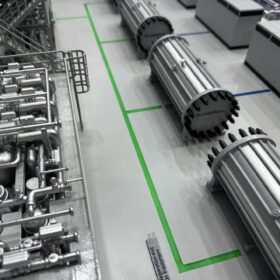
The Hydrogen Stream: Luxcara advances 20 MW hydrogen project in Norway
Luxcara says preparatory work for its Bodø electrolysis plant is underway in Norway, with commercial operations set to begin in 2026, while ACWA Power and Snam have signed an agreement to deliver hydrogen from Saudi Arabia to Europe.
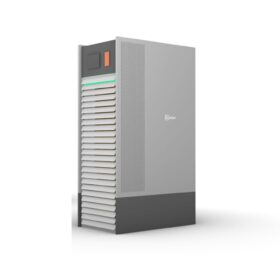
Italian startup offers green hydrogen generation, storage system for homes
Italian startup Hybitat Srl has developed a hydrogen production and storage system for long-term storage of surplus residential and commercial solar power. The system includes a main unit with an electrolyzer and fuel cell, as well as a storage unit with 3 kg of hydrogen capacity and 100 kWh of energy capacity.
The Hydrogen Stream: Uniper opens hydrogen pilot in Germany
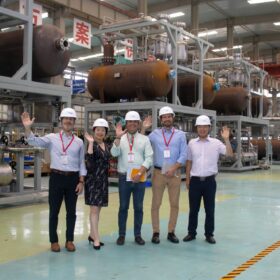
Uniper says it has launched its Hydrogen Pilot Cavern (HPC) Krummhörn plant in Germany with nearly 500,000 cubic meters of green hydrogen storage, while Air Liquide has inaugurated a 20 MW electrolysis plant in Oberhausen, Germany.

Floating photovoltaics for hydrogen generation, storage
New research from the UK shows that Oman could utilize a floating PV farm at the Wadi Dayqah Dam for hydrogen generation. The scientist said the project is technical viabile, although only with advancements in hydrogen energy storage technology could make it economically feasible.
Fraunhofer IAO, DHBW Heilbronn examine decentralized hydrogen storage
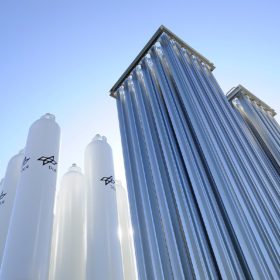
Researchers have analyzed various storage options for green hydrogen, such as in neighborhoods, at company locations and on campus grounds. Their study provides an overview of the respective advantages and disadvantages of physical, chemical and pure hydrogen storage.
Improving LCOE of PV-driven hydrogen via reciprocating engines
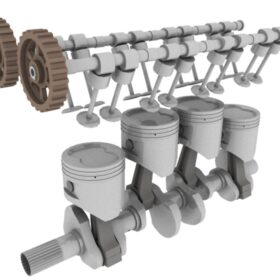
UNSW scientists have suggested to use dual-fuel reciprocating engines for adding gas-to-power operations in large scale production of hydrogen based on PV power. The preliminary findings of their research show that the proposed system is still achieving a too high LCOE for commercial maturity. Decreasing electrolyzer costs, policy interventions and changing energy market dynamics, however, may more than halve the LCOE values in the future.

Techno-economic feasibility of hydrogen storage in hydro-dominated countries
Scientists have investigated different techno-economic scenarios for using hydrogen storage in combination with hydropower and pumped hydro storage in Switzerland. They have found that hydrogen storage plays no major role under most conditions.
PV-driven hybrid hydrogen fuel cell system for building applications
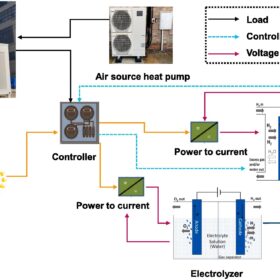
Scientist in Canada have proposed to combine rooftop PV power generation with an alkaline electrolyzer and a fuel cell to generate hydrogen in buildings. The new system is intended at enabling seasonal energy storage and reduce a home’s levelized cost of energy.
