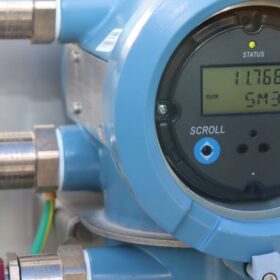
Australian gas utility hits 10% renewable hydrogen blend milestone
Western Australian gas utility ATCO Australia has achieved a network distribution blend of up to 10% renewable hydrogen, produced by a solar-powered electrolyzer, for 3,000 homes.

Standalone PV-hydrogen-battery system for EV charging
Researchers in Pakistan have tested several configurations of an offgrid PV-hydrogen system intended to power EV chargers. The system achieved the lowest levelized cost of electricity when it was combined with battery storage.
Australia launches multimillion-dollar green hydrogen auction with Germany
Investment confidence in Australia’s green hydrogen industry has received a $660 million boost following a joint declaration with Germany to negotiate supply chains that guarantee European buyers for Australian products.
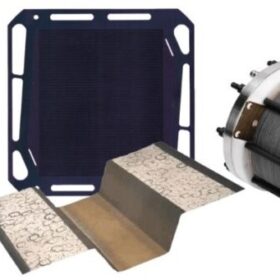
Novel fuel cell tech based on silicon-based bipolar plates
Australia’s Clean Energy Finance Corporation has backed a hydrogen fuel cell developer $7 million to support an innovative form of technology using silicon-based bipolar plates.
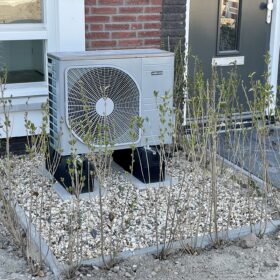
Dutch scientists assess consumers’ willingness to pay for renewable heating
A survey of 1,797 residents was used to determine the willingness to pay for low-carbon residential heating in the Netherlands. On average, respondents were willing to pay a premium of 33% for electricity-based heating. Policy recommendations were also provided as part of the study.
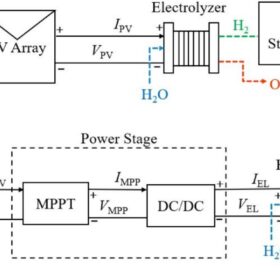
Direct vs. indirect coupling in PV-driven hydrogen generation
Researchers in Spain have made a comparative analysis of annual PV-powered hydrogen production for direct and indirect configurations and have found that indirect systems not only produce more hydrogen but also that they show higher resilience to module power losses.

Israel presents 2050 net-zero roadmap envisaging up to 77% solar share
The Israeli Ministry of Energy and Infrastructure has presented three scenarios for its 2050 green goals, changing in accordance with developments in solar, hydrogen, and nuclear power production. In the most solar-focused scenario, the country would have a PV capacity of 108 GW.
Offgrid PV-driven hydrogen vs. standalone solar-plus-storage
A German research team has compared the economic performance of an offgrid PV-electrolyser-fuel cell system with that of a standalone solar-plus-storage counterpart in a building in Niger. Its analysis showed that decentralized PV-driven hydrogen could achieve considerable lower levelized cost of energy and levelized cost of storage than the PV-battery system, with these values reaching €0.12 ($13.1)/kWh and €0.35/kWh, respectively.
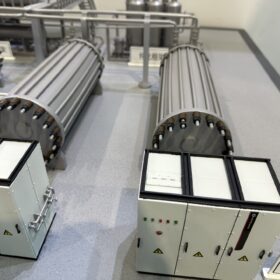
New method to calculate levelized cost of hydrogen
Scientists in Australia have incorporated overload capacity and power-dependent efficiency of the electrolyser in a novel techno-economic model to calculate the levelized cost of hydrogen. The proposed methodology was applied to ascertain the impact of internalizing environmental costs on the cost-competitiveness of green hydrogen compared to grey hydrogen.

Floating photovoltaics for hydrogen generation, storage
New research from the UK shows that Oman could utilize a floating PV farm at the Wadi Dayqah Dam for hydrogen generation. The scientist said the project is technical viabile, although only with advancements in hydrogen energy storage technology could make it economically feasible.
