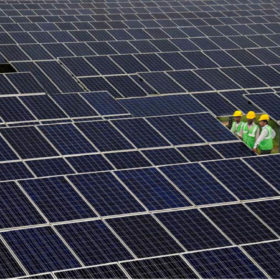
New leaders emerge in India’s 2022 solar market
The Indian solar sector experienced major shifts in market share during 2022, driven by policy changes such as the implementation of basic customs duty on cells and modules and the introduction of an approved list of models and manufacturers, according to Mercom.

Amp Energy wins 150 MW wind-solar auction in India with $0.037/kWh bid
Amp Energy has won a 150 MW wind-solar auction in India with a bid of INR 3.07 ($0.037)/kWh.

India’s green hydrogen demand to reach 2.85 MMT/year by 2030, says USAID
USAID’s South Asia Regional Energy Partnership (SAREP) says in a new report that Indian green hydrogen demand will reach 2.85 million metric tons (MMT) per year by 2030.
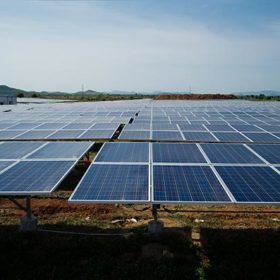
Indian government grants commissioning extension for solar projects on case-by-case basis
Solar Energy Corp. of India, NTPC and NHPC will examine developers’ requests for an extension to their solar and wind-solar projects on a case-by-case basis. The extension will only be granted if the developer has taken all possible measures to implement the project, such as land acquisition and orders for modules and balance-of-system supply, but couldn’t complete it for reasons beyond his control.

Indian PV market must invest in quality infrastructure
In its latest monthly column for pv magazine, the International Renewable Energy Agency shares a series of recommendations gathered from sector experts to help India reach its ambitious solar targets. According to its experts, Quality Infrastructure (QI) will be crucial for the country’s PV market in the years to come. QI is an interdependent ecosystem of the different elements (accreditation, certification, standards, testing, metrology, inspection & monitoring) working together in harmony, and all associated services should be developed in unity and not in a piecemeal fashion. A sound and internationally harmonized QI not only ensures that PV products and services deliver as expected by customers and national energy authorities, but also enables more efficient and competitive markets based on a global economy on scale.
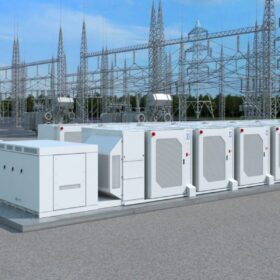
India’s NTPC launches 1.5 GW/9 GWh energy storage tender
NTPC Renewable Energy is accepting bids to develop 1.5 GW/9 GWh of cumulative energy storage capacity on a build-own-operate basis anywhere in India. It will use the storage capacity to ensure round-the-clock renewable and/or peak power supplies. Bidding closes on June 16.
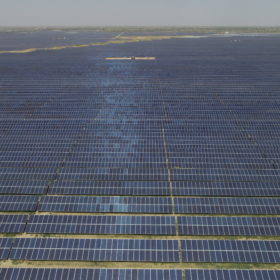
India to annually tender 50 GW of renewables over next 5 years
The structured bidding trajectory of India’s tenders will provide sufficient time for renewables developers to plan their finances, develop business plans, and manage the supply chain more efficiently, says Indian Power Minister R.K. Singh.
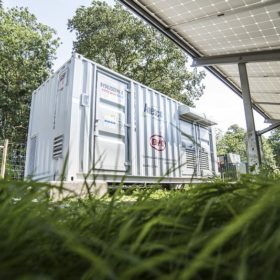
IndiGrid commissions first solar-storage project
IndiGrid has commissioned a pilot project featuring a solar panel bank coupled with a battery energy storage system (BESS), at its Dhule substation in the Indian state of Maharashtra.
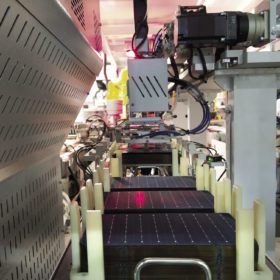
India’s solar module manufacturing capacity could hit 110 GW by 2026
India could become the world’s second-largest solar manufacturer by 2026. It will also have a notable presence in all upstream components of PV production, such as cells, ingots/wafers, and polysilicon, according to a new report.
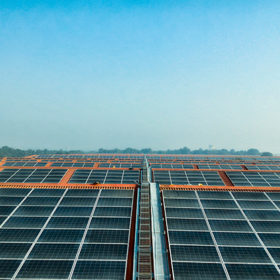
India to add 16.8 GW of solar in 2023
JMK Research says it expects India to install 14 GW of new utility-scale solar capacity and 2.8 GW of rooftop PV in the 12 months to Dec. 31, 2023.
