
Improving diamond wire sawing to reduce kerf loss in solar wafer production
Researches in China have sought to assess how lateral vibration in diamond wire sawing can increase kerf losses in solar wafer manufacturing and have developed a predictive model than can reportedly help reduce them. Their analysis showed that, with constant sawing parameters, smaller wafers suffer from greater excess kerf loss.
Chinese PV Industry Brief: Tongwei, GCL and Daqo post steep H1 losses
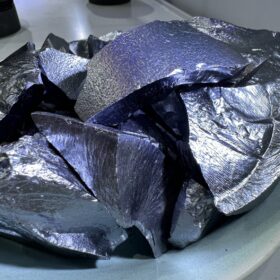
Tongwei, GCL Technology and Daqo New Energy all reported steep first-half 2025 losses on weak polysilicon prices, with rising n-type output and cost controls failing to offset margin pressure.
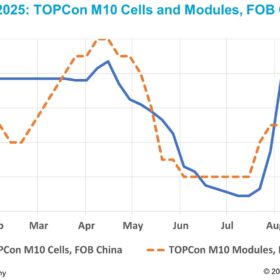
China’s TOPCon cell prices rise on tighter downstream oversight
In a new weekly update for pv magazine, OPIS, a Dow Jones company, provides a quick look at the main price trends in the global PV industry.
Chinese PV Industry Brief: Polysilicon prices edge higher, wafers flat
The upward trend of polysilicon prices continued this week, although by only 0.42%, with polysilicon producers keeping utilization rates between 46% and 80%, according to the CNMIA.
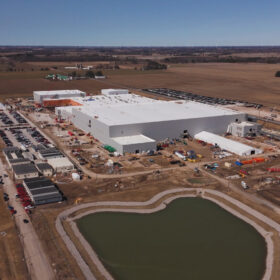
Corning, T1 Energy agree to U.S. domestic solar polysilicon, wafer supply deal
The partnership supports a full domestic energy supply chain from raw polysilicon to finished solar panels.
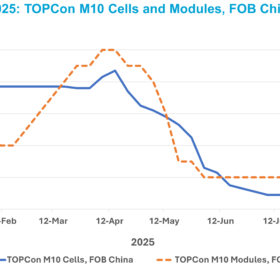
China solar cell rally stalls amid worsening margin squeeze
In a new weekly update for pv magazine, OPIS, a Dow Jones company, provides a quick look at the main price trends in the global PV industry.

China’s $7 billion consolidation plan may be reflected in prices in short time
China’s reported $7 billion plan to cut polysilicon overcapacity could prompt wafer makers to stockpile lower-cost material and push prices higher, with cell and module suppliers more willing to accept increases, Xin You, senior market analyst at S&P Global, tells pv magazine.

New research shows cast mono wafers are still far from commercial maturity
A Chinese research team has investigated impurity and defect levels in solar cells based on mono cast wafers and have found that around 30% of the devices present an “excessive” reduction in power conversion efficiency. The scientists concluded that cast monocrystalline silicon will unlikely capture a meaningful market share in the near future.

Abandoned US nuclear site to host 16,000 MT polysilicon plant
Highland Materials will build a 16,000 metric ton (MT) solar-grade polysilicon plant on a former US nuclear project site, under a long-term lease with Pivotal Manufacturing.
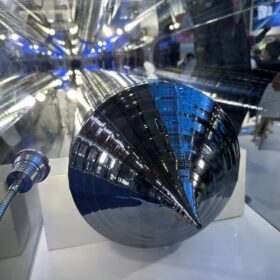
Is China’s $7 billion plan to reduce polysilicon overcapacity feasible?
OPIS, Wood Mackenzie, and Bernreuter Research have spoken with pv magazine about China’s alleged $7 billion plan to reduce polysilicon oversupply and restore a sustainable pricing environment for the PV supply chain, but opinions remain divided on its feasibility and effectiveness.
