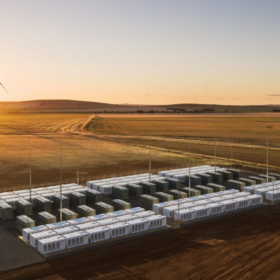
Global utility-scale battery capacity rises 12-fold in 2020-24 period
The global capacity of utility-scale batteries increased more than 12-fold between 2020 and 2024 to 124 GW, while average battery costs fell 58% over the period, according to the Electricity 2026 report from the International Energy Agency (IEA).

Irish solar rises in 2025 as government plans €18.9 billion of grid upgrades
Provisional data from the Sustainable Energy Authority of Ireland (SEAI) for 2025 showed that monthly utility-scale solar generation increased from an average of 0.73 TWh in 2024 to 0.99 TWh in the first nine months of 2025.

IEA sets distributed solar, storage policy path for Ukraine
A report by the International Energy Agency (IEA) recommends three strategies to accelerate the deployment of distributed solar and battery energy storage systems (BESS) in Ukraine as the country works to increase its energy security.
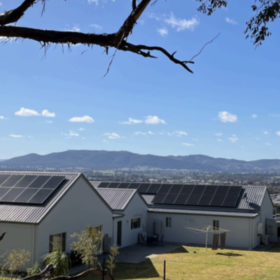
Australia installs 5.2 GW of solar in 2024
The International Energy Agency (IEA) says that Australia installed 5.2 GW of solar capacity in 2024, bringing the national total to 40 GW across distributed and utility-scale systems.
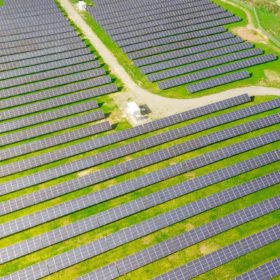
Global electricity demand to rise in 2026 as renewables lead, says IEA
Global electricity demand is set to rise more than 3% per year through 2026, driven by growth in Asia and greater use across industry, data centers, and transport, with renewables, gas, and nuclear meeting most of the increase, says the International Energy Agency (IEA).

Canada can align renewable energy and conservation goals, says IEA
Countries can avoid conflict between biodiversity conservation efforts and renewable energy development by using proactive measures, found a model developed by the International Energy Agency (IEA) and Natural Resources Canada.
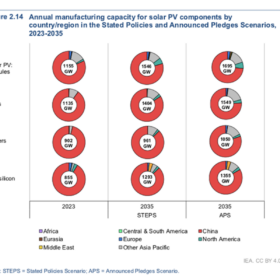
Solar module manufacturing capacity could exceed 1.5 TW by 2035, says IEA
The International Energy Agency’s (IEA) latest report, which maps out the future evolution of clean energy manufacturing, says the combined global market for PV, wind turbines, electric cars, batteries, electrolyzers, and heat pumps will rise from $700 billion in 2023 to more than $2 trillion by 2035.
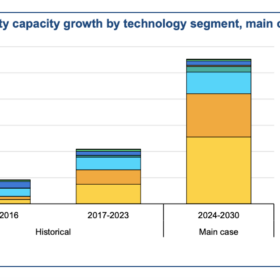
IEA forecasts over 4,000 GW of new solar by 2030
The International Energy Agency says renewables are on course to meet almost half of global electricity demand by 2030, with solar accounting for 80% of the growth in capacity.
IEA calls for stronger solar, wind integration measures
The International Energy Agency’s (IEA) latest report warns that failing to support integration at the point of deployment could jeopardize up to 15% of solar and wind projects by 2030. This shortfall would reduce their combined share of the global electricity mix by 5%.
Can just-transition cash fire African renewables?
African governments are being encouraged to leave fossil fuels untapped in return for Just Energy Transition Plan (JETP) finance. Can these new financing plans from Western governments achieve their ambitious aims?
