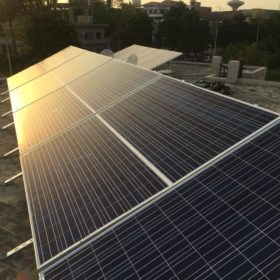
Pakistan should turn to renewables for energy security – IRENA
With its growing population and rapidly increasing energy needs, Pakistan’s energy security is undermined by the overriding share of imported fossil fuels in its energy mix. But, by turning to its untapped, tremendous solar, wind and biomass potential, the South Asian country could spur social and economic development, while improving energy access, says IRENA.
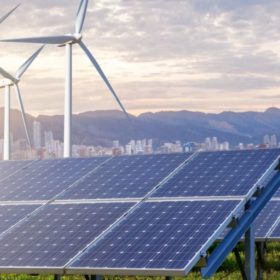
RE generation capacity topped 2,179 GW in 2017 – IRENA
According to the latest statistics from the International Renewable Energy Agency (IRENA), global renewable energy (RE) generation capacity hit 2,179 GW last year. Leading the charge were renewable hydro, onshore wind and solar PV.
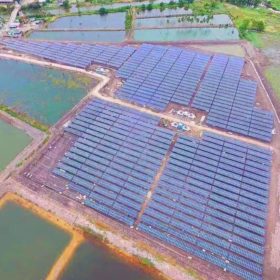
Renewables to drive economic growth in SE Asia — IRENA
The 10 members of the Association of Southeast Asian Nations (ASEAN) are on track to make solar and other renewables account for 23% of the region’s total primary energy supply (TPES) by 2025, but governments will need to create better policy and investment frameworks to make it happen, according to the International Renewable Energy Agency (IRENA).
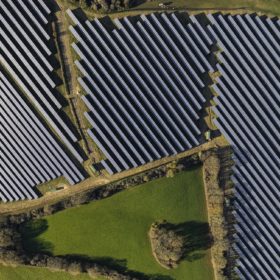
Increasing 2030 RE share positive for EU economy, IRENA report shows
Under the REmap case study for the EU, presented by the International Renewable Energy Agency (IRENA) in its latest report, solar PV and wind power will account for the bulk of capacity additions in the power sector by 2030. The potential identified for solar PV amounts to 270 GW, an 86 GW increase on the business as usual scenario.
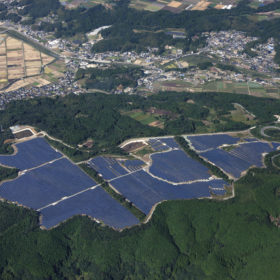
Japan to install up to 7 GW in 2018 despite cancellation of 14.6 GW of approved capacity — report
Japan will likely install 6 GW to 7.5 GW (DC) of solar in 2018, from about 7 GW in 2017, despite government efforts to cancel approvals for projects that were registered under the country’s old feed-in tariff (FIT) program, according to a new report.
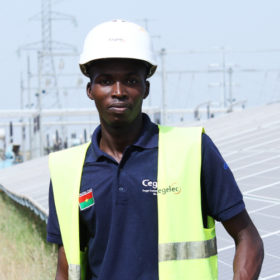
ECREEE launches scheme to create qualified solar workforce in West Africa
The scheme is being implemented with the support of the West African Economic and Monetary Union (UEMOA), the International Renewable Energy Agency (IRENA) and the German development agency, Deutsche Gesellschaft für Internationale Zusammenarbeit (GIZ).
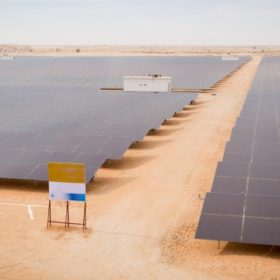
Masdar, EDF sign MOU to develop sub-Saharan Africa’s off-grid sector
A Memorandum of Understanding (MOU) has been signed by Masdar, the Abu Dhabi Future Energy Company, and EDF SA, the parent company of the EDF Group, to develop off-grid projects in sub-Saharan African countries.
French company attracts $12.7 million funding for Kazakhstan solar project
France-based Urbasolar SAS has attracted around US$12.7 million in funding for its planned 14 MW solar PV project in Kazakhstan.
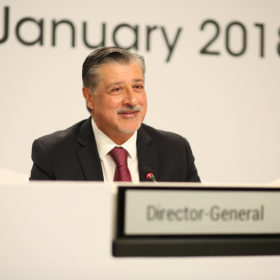
8th IRENA Assembly: Utility scale solar LCOE falls 73% since 2010
All forms of renewable energy will be cost competitive with traditional generation sources by 2020. This was one of the key findings in the latest report from the International Renewable Energy Agency (IRENA). It was delivered yesterday at IRENA’s 8th annual Assembly in Abu Dhabi.
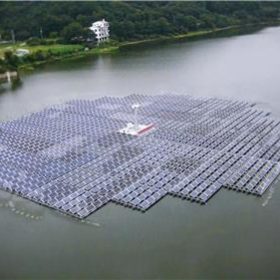
Solar installations to soar under new South Korean energy plan
South Korea’s total installed renewables capacity will spike to 58.5 GW by 2030, from just 11.3 GW at present, under a new energy plan that prioritizes solar and wind development over nuclear generation.
