
CPV-solar thermal system delivering LCOE of $0.03/kWh
Researchers have created a device to produce electricity and steam at the same time. The system is said to offer 85.1% efficiency and deliver steam at up to 248 degrees Celsius. The converter combines III–V, triple-junction solar cells and a high-efficiency solar thermal system based on parabolic trough collectors.
Interview: Designing circular solar modules
Amid a growing appetite for sustainability from customers, Lithuanian solar panel maker Solitek is applying circular principles to its production operations. Measures include embracing digitalization and new approaches to design. Project manager Tadas Radavičius has spoken to pv magazine about the company’s work and how Solitek is supporting European projects which are considering circular solar.

Jinko bifacial panel order to expand 160 MW Chilean project
The Chinese manufacturer will supply 126 MW of modules to a project in Antofagasta which was originally installed using its products in 2016.
Canadian Solar joins the 500 W-plus panel club
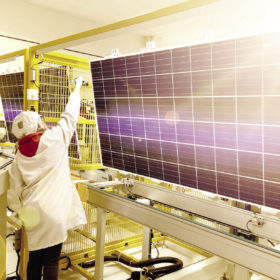
The Chinese-Canadian company has unveiled a range of high-power modules which are set to go into mass production by early next year. The series includes a commercial and industrial rooftop-dedicated product offering a reported 405 W.
Global solar capacity may reach 1,448 GW in 2024
SolarPower Europe has predicted the volume of new PV capacity added this year will be 4% less than last year’s figure because of the Covid-19 crisis. At the end of 2019, the world had topped 630 GW of solar. For 2020, around 112 GW of new PV capacity is expected, and in 2021, newly installed capacity could be 149.9 GW if governments support renewables in their coronavirus economic recovery plans.
Single-axis bifacial PV offers lowest LCOE in 93.1% of world’s land area
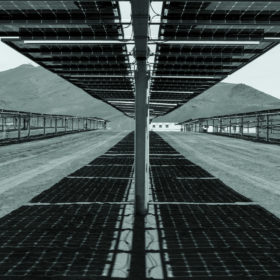
Researchers from the Solar Energy Research Institute of Singapore have concluded that utility-scale PV projects relying on bifacial panels and single-axis trackers deliver the lowest levelized cost of energy in most of the world. They found that the combination of bifacial products with dual-axis trackers is still too expensive, despite the higher yield. The second-lowest LCOE is offered by monofacial single-axis tracker plants.
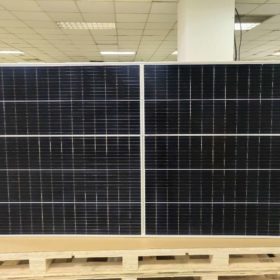
Trina secures 105 MW order for its 500 W modules
The Chinese manufacturer will provide Indian developer SunSource Energy with its Vertex panels. Shipments will be made in the fourth quarter.
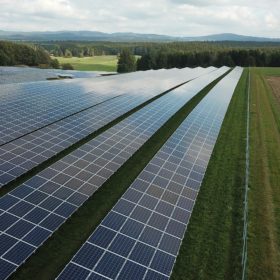
LCOE from large scale PV fell 4% to $50 per megawatt-hour in six months
Analysts at Bloomberg New Energy Finance say the lowest-cost projects financed in Australia, China, Chile and the UAE in the last six months hit a levelized cost of energy of just $23-29/MWh and the best solar and wind projects will produce electricity for less than $20/MWh by 2030.
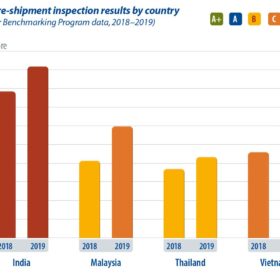
Quality benchmarking in times of tariffs
The PV industry’s rapid factory expansions and quick product rollouts lead to a constant balancing act between the streamlining of production and the introduction of new features to push the boundaries of power generation and achieve lower LCOE. Given these competing factors, CEA has brought together its data based on experience in providing third-party quality assurance oversight to produce its Supplier Benchmarking Program. Joseph Johnson, CEA’s lead analyst for solar and storage, digs into the data.
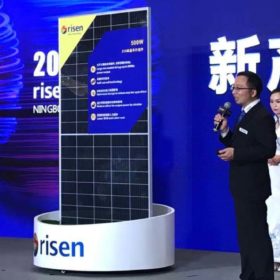
‘First shipment of 500 W modules’ announced
Chinese manufacturer Risen Energy will supply Malaysia’s Tokai Engineering with 20 MW of its new panels, unveiled in December. Risen claims its products can help reduce balance-of-system project costs by 9.6% and the levelized cost of energy by 6%.
