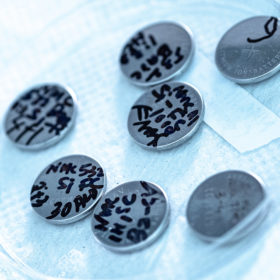
An alumina lining for silicon in storage
Scientists at Rice University in the U.S. have conducted experiments with lithium-ion batteries using silicon as an anode material and made an unexpected discovery regarding an aluminum oxide passivation layer at the cathode. The finding could open up a new pathway toward better performing lithium-ion batteries.

Suzuki-led JV to invest $517m in second phase of Indian lithium-ion factory
A joint venture with Japanese peers Toshiba and Denso will make the investment in the Gujarat plant over the 2021-25 period, having pumped $174 million into the first phase of development.

Three steps to fast-charging potassium batteries
Scientists led by Moscow’s Skolkovo Institute of Technology have drawn upon several of their recent battery material innovations to create a potassium-ion device. The institute says its development will pave the way for ultrafast and durable, high capacity metal-ion batteries, to supply rising demand for energy storage innovations.

New rules for lithium-sulfur selection
Scientists at the United States’ Argonne National Laboratory worked with a class of electrolyte materials they say could greatly improve the performance of lithium-sulfur batteries. The group has devised a selection rule which it says will help researchers select the most suitable electrolyte materials for different battery systems.

Pyrazine polymer PHATNs up cathode in sodium-ion batteries
Scientists at the University of Maryland have developed an organic polymer electrode which they claim demonstrates stable function for a sodium-ion battery over 50,000 cycles and also offers encouraging performance in magnesium-ion and aluminum-ion storage devices.
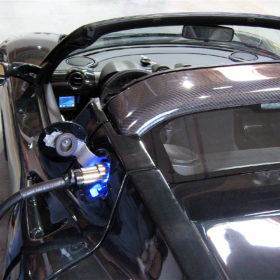
‘They created a rechargeable world’
American John B. Goodenough, Brit Stanley Whittingham and Akira Yoshino, from Japan, will receive the Nobel Prize for Chemistry for developing the lithium-ion battery. A statement from the Royal Academy of Sciences of Sweden said the invention “laid the foundations of a society without wires and fossil fuels, and [they] are of great benefit to humanity”.

‘New and strange properties’ provide a boost to energy storage
MIT scientists have developed a class of liquid electrolyte with properties they say could open up new possibilities for improving the performance and stability of lithium batteries and supercapacitors.
Asian battery manufacturers eye European riches on offer
A report produced by an AI and automation market research company says an anticipated boom in the European storage market – driven by a desire to reduce carbon emissions – will attract producers as demand outside China tails away.

Understanding solid state degradation
Scientists at the U.K.’s Faraday Institution have been able to observe degradation mechanisms at the lithium metal anode in a solid state battery, and made several discoveries which could improve the performance and design of future solid-state lithium-ion batteries.

Unlocking lithium metal’s stored potential
Several new concepts in lithium-ion storage technology have the potential to greatly the increase the energy capacity of batteries. Among them are lithium metal anodes, which could potentially increase energy density by more than 50%. With a newly optimized electrolyte, scientists at the University of California, San Diego have taken another step toward making the idea a commercial reality.
