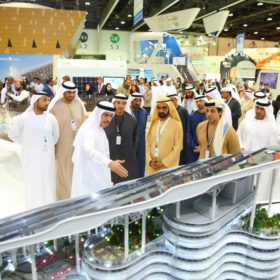
WFES 2018: Three trends driving PV in MENA
Two weeks ago, the 8th World Future Energy Summit opened its doors in Abu Dhabi. The conference and trade show comprised six co-located events across the cleantech spectrum, and attracted over 33,000 visitors across four days. The rapid increase in the scale of activity within the solar sector in the region was on display throughout the show. Here are three key takeaways from WFES 2018.
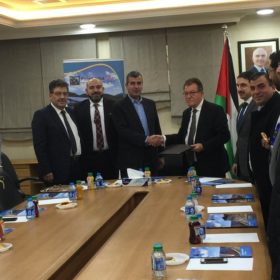
Philadelphia Solar secures PPA for 68 MW solar facility in Jordan
The solar module maker expects to reach financial close for the project in the third quarter of this year.
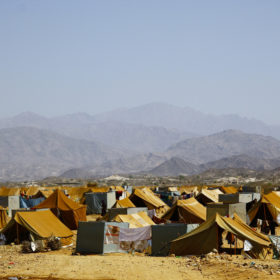
Yemen sees solar energy grow despite civil war
The disrupture of the country’s power system, which is being caused by the ongoing civil conflicts, is pushing Yemenis to resort to solar as a primary source of energy. According to preliminary estimates, more than 300 MW of PV power generators were installed in Yemen since the war began in 2015.
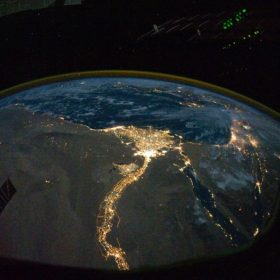
The weekend read: Solar’s new fertile crescent
Middle Eastern PV: The Jordanian solar sector has enjoyed near-constant growth in recent years, proving that it is a market founded on a sustainable and reliable base. Investors have been wondering for a few years whether Egypt can follow Jordan’s example successfully, and the signs are good that 2018 will prove to be a strong year for Egypt’s solar development. pv magazine explains the forces driving this optimism.

Lebanon’s 180 MW solar tender moves forward
Overall, 42 bids were submitted to Lebanon’s Center for Energy Conservation (LCEC) for 180 MW of tendered PV capacity. The LCEC will now start the evaluation process in two weeks.
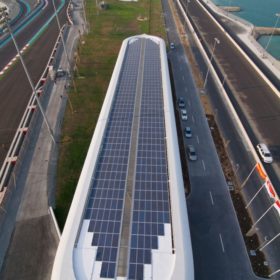
UAE: Rooftop specialist Environmena acquired by UK investment firm
U.K. investment firm, Arjun Infrastructure Partners is expected to bring strategic support and access to capital to the UAE-based solar developer.
Oman to launch tender for more than 200 MW of solar by end of 2017
The tender, where capacity may even reach 500 MW, is part of the Oman government’s plan to diversify the country’s energy mix.

Interview: after Saudi Arabia, how low can solar prices go?
The recent Saudi Arabian tender for 300 MW of solar PV saw a bid of $0.0178/kWh – the lowest price by far yet seen globally. Aymen Grira of French energy consultancy Altran discusses this bid, and explores the wider PV potential of the MENA region.
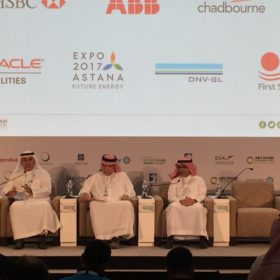
Saudi Arabia’s 300 MW solar tender may conclude with lowest bid ever
A consortium formed by UAE-based Masdar and French energy giant EDF has offered to deploy all the tendered capacity at a LCOE of 0.06697 SAR ($0.0178) per kWh. In addition, seven of the eight bids were under $0.03 per kWh. The tender’s bidders will be announced by the end of January 2018.
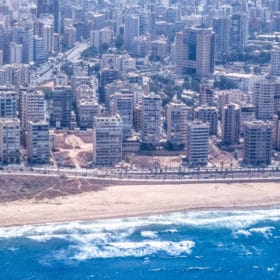
Lebanon issues RfP for 180 MW of solar
Lebanon’s authorities had received 256 bids for solar energy projects totaling 3 GW in the pre-selection phase of the tender process.
