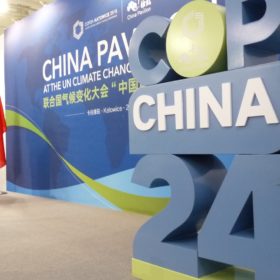
Hanergy welcomes latest policy noises to come out of Beijing
The thin-film manufacturer and project developer says the Chinese government’s package of measures to drive subsidy-free solar projects will ensure a proliferation of new capacity additions and consolidate the strength of big players like itself.

China unveils an ambitious new push on grid parity solar
Beijing has outlined a series of policies mandating local and provincial authorities, state-owned banks and grid operators to pull out the stops to drive the rapid escalation of subsidy-free PV projects. The announcement has seen Chinese solar stocks on the rise.

Positive signals from China boost 2019 forecasts
On November 2, China’s National Energy Administration held a symposium to evaluate the results of the 13th Five-Year Plan for solar PV development at its halfway point, discussing the adjustment of PV and thermal generation targets in the plan. As a result of this, there is renewed positivity regarding China’s domestic solar demand in 2019-2020.
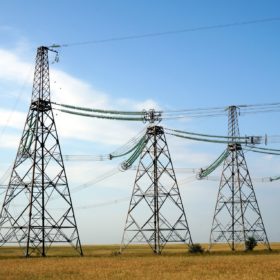
Beijing prepares to take more planned approach to solar
Curtailment issues will prompt Chinese government to focus on new project development in the urban east, to reduce power losses. The central authorities also want to ramp up the electricity trading market and peak shaving technology.
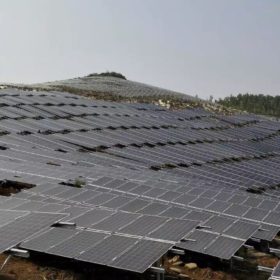
China may raise 2020 solar target to more than 200 GW
The target of 105 GW of cumulative installed photovoltaic power, which was originally set for the end of the decade, has already been surpassed. PV Info Link says the 2020 solar target may now be revised upwards to 210-270 GW.
An investigation at China’s National Energy Agency might delay PV programs
On September 21, the Communist Party of China’s anti-graft body said in a statement that it is investigating the head of the country’s energy agency for “serious” disciplinary violations. While some believe the investigation will not change the country’s PV industry, others fear it could hamper crucial programs.
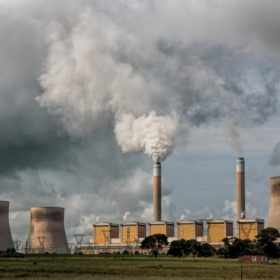
China to add 259 GW of coal capacity, satellite imagery shows
By analyzing satellite imagery, research group, Coalswarm has found that coal-fired power stations in China totaling 259 GW, which were supposed to have been scrapped, are being built. When fully commissioned, they will reportedly represent the equivalent of total coal-fired capacity in the United States. Not only does this news go against China’s current push into renewables, but also raises serious air pollution concerns at a time when levels should be decreasing.

Is China about to add 10 GW of unsubsidized solar?
Rumor has it industry lobbying has persuaded the government to agree to 300-500 MW of distributed PV in each of the populous nation’s 34 local government areas, with a reduction in “non-technical costs” making up for a lack of guaranteed payment.
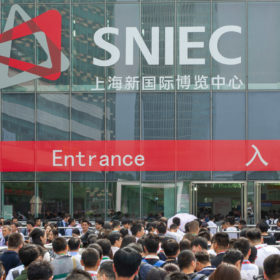
IHS Markit at SNEC: Grid parity within reach in China
At their 2018 PV Market Workshop, across the street from the massive SNEC solar exhibition in Shanghai, IHS Markit offered interesting insights into the further development of China’s PV and energy storage markets, as well as the global PV market as a whole.
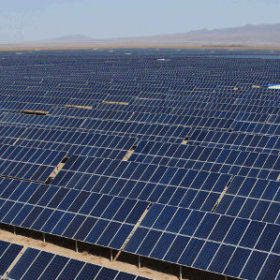
China bucks forecasts to install 9.65 GW of PV in Q1, DG leads the way
Of the 9.65 GW of solar PV China installed in the first quarter of 2018, 7.68 GW comprised distributed generation (DG) systems, reports China’s National Energy Administration (NEA). Changes to the country’s PV policy have also been proposed.
