A record year for trackers
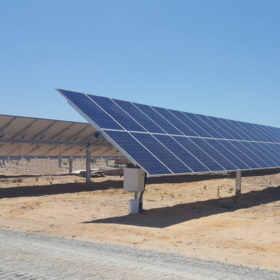
It was a record year for global shipments of single-axis solar photovoltaic (PV) trackers in 2018, as they increased by more than 40%, surpassing 20 GW globally for the first time, writes IHS Markit senior analyst Camron Barati. While the United States continued to be the largest individual market for single-axis trackers last year, shipments also increased in Mexico, Australia, Egypt, Spain, and other large utility-scale markets.

Texas moves closer to merchant solar
Intersect Power has gone live with news the company has 1.7 GWdc ready for construction in Texas and California, including a project which holds a hedge and no power purchase agreement.

A common language for bifacial PV
This week pv magazine was in Amsterdam for the sixth edition of the BifiPV workshop, where the discussion focused on the impressive achievements made by bifacial solar modules and the challenges the technology faces as it moves toward mainstream adoption.
IHS Markit: Trackers to account for a third of PV installations
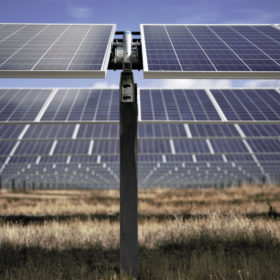
New analysis predicts more than 150 GW of tracker capacity will be installed in the next five years – around a third of all ground mount projects up to 2024. Rapid growth in Europe, the Middle East and Africa; and the better cost structures possible from combining trackers and bifacial modules are singled out as key trends.
NEXTracker to expand sales operations in Europe
The U.S.-based company, which is now supplying solar trackers for more than 400 MW of contracted projects in the U.K., Spain and Greece, will bolster its sales presence in Europe, where it anticipates a “solar renaissance.”

NEXTracker maintains dominance of global tracker market
The global market for solar trackers expanded by 20% in 2018, with total international shipments spiking 36% year-on-year to surpass the 20 GW mark, according to a new report by Wood Mackenzie. NEXTracker and Array Technologies maintained their industry dominance, but a number of smaller competitors claimed a greater share of the global market in the 12 months to the end of December than ever before.
Rise of bifacial lifts profits for the world’s tracker companies
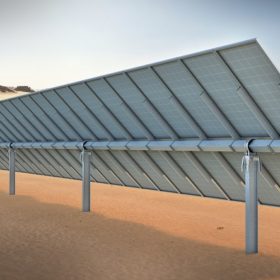
Things are hotting up in the tracker world as the desire to squeeze down the price per Watt of solar power intensifies. And the rise of the trackers is attracting some well-known businesses to buy their way into the field.

Gridserve to deploy 60 MW of bifacial-plus-tracking projects in the UK
Two sites with capacities of 34.7 MW and 25.7 MW will supply unsubsidized power to Warrington Borough Council. The smaller project will provide the local authority’s energy needs and reduce its electricity bill while the larger one will sell renewable energy on the open market, further bolstering council income.

Middle East solar pioneers have their efforts recognized
DEWA projects featured strongly in this year’s accolades but there was also recognition for projects beyond the region and some eye-catching innovations.

2018 pv magazine Annual Award winners announced
pv magazine is pleased to announce the winners of our inaugural Annual Award. Winners will be recognized in a ceremony alongside the Middle East Solar Industry Associations’ Solar Awards, during the World Future Energy Summit.
