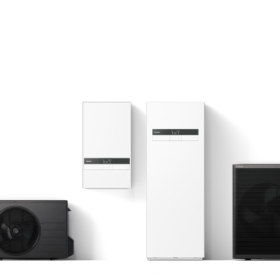
Panasonic releases propane heat pump for residential applications
Japan’s Panasonic has developed an air-source heat pump that uses propane (R290) as the refrigerant. It can produce between 5 kW and 9 kW of heat, as well as domestic hot water up to a temperature of 75 C. It says the heat pump can be paired with rooftop solar to maximize self-consumption. The new Aquarea series also includes a heat pump with R32 as the refrigerant.

Key takeaways from Poland’s Enex Expo
The record-breaking size and bustling halls of Enex Expo showed that the Polish PV market has no intention of slowing down. While last year’s switch from net metering to net billing is expected to continue to reverberate through the residential solar market, the commercial and industrial (C&I) and utility-scale PV market segments stand ready to pick up the slack.

The mobility rEVolution: Lithium battery triggers New York high-rise fire
The New York City authorities have determined that a lithium battery in an unspecified micromobility device triggered a recent high-rise fire that injured dozens in Manhattan. Saudi Arabia has launched its first EV brand, while Indian researchers have developed a new anode material that can help to recharge lithium-ion EV batteries in minutes.
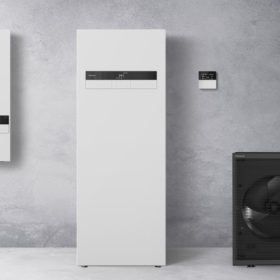
Panasonic brings air-to-water heat pumps to Europe
Panasonic’s new heat pump can supply domestic hot water, heating and cooling from a single, integrated unit. It can also synchronize with the Japanese company’s PV panels and its CZ-NS4P technology printed circuit board technology, while also ensuring smart-grid compatibility.

Panasonic presents 22.2% efficient all-black heterojunction solar module compatible with its Evervolt battery
The new module series has a power output ranging from 420 to 430 W, a temperature coefficient of -0.26% per degree Celsius, and an efficiency of up to 22.2%.
DNV identifies CATL, Narada batteries as top performers
DNV recently evaluated 19 battery cells through its testing program and found that lithium iron phosphate (LFP) cells from Chinese battery makers CATL and Narada offer the best performance in stationary energy storage applications.
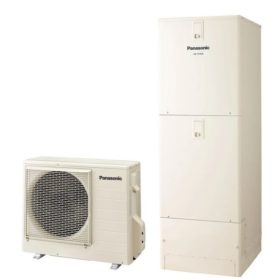
Panasonic to scale up heat pump output in Czechia
Panasonic has revealed plans to increase the annual production of heat pumps at its facility in Czechia to 500,000 units by March 2026.
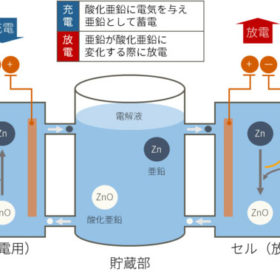
Sharp begins developing zinc-air flow batteries for renewables storage
Sharp is developing a zinc-air battery tech for renewables storage. The device will be reportedly safer than their lithium-ion counterparts, with high energy densities.
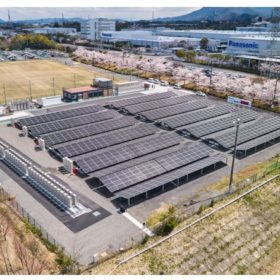
Panasonic combines fuel cells, batteries, PV to power factory in Japan
Japan’s Panasonic claims its new pilot solar-plus-hydrogen facility marks the first attempt to create a factory powered by 100% renewables, via the full-scale use of hydrogen.
Battery supply could remain tight into next year
Analyst Wood Mackenzie has predicted soaring demand for electric vehicle devices will ensure supply will not keep pace with demand until some point in 2023.
