Chinese module prices to fall by 15% from Q4 2022 to Q4 2023, says CEA
Solar module prices will be pressured by rising industrial capacity this year, with capacities doubling in the ingot/wafer stages and potentially quadrupling for polysilicon by 2027, according to the latest PV pricing report from Clean Energy Associates (CEA).
Get what you pay for
Clean Energy Associates (CEA) has calculated the price premium that solar developers will swallow in return for the levelized cost of energy (LCOE) savings offered by the latest generation of high-efficiency PV panels.

Weekend Read: As simple as IBC
The search for ever higher conversion efficiency has driven solar researchers to focus on back-contact cell approaches, and efforts to devise more cost-effective manufacturing are bringing technologies such as interdigitated back contact (IBC) solar into the mainstream, as Mark Hutchins reports.
Why solar needs to slim down on silver
New research from UNSW in Australia outlines the need for solar cell and module makers to reduce or eliminate the use of silver in their products. Based on expected PV growth, in line with climate change commitments, solar manufacturers would require at least 85% of global silver reserves, according to the new study.

Australia funds ultra-low-cost PV future
The strength of applications for the Australian Renewable Energy Agency’s ultra-low-cost solar research funding round was so strong that the agency had to add AUD 1.5 million ($1.03 million) to its original allocation. The strength of competition pushed the process into 2023, but the 13 research projects aiming to achieve ultra-low-cost solar have now been awarded.
Gautam Solar unveils 450 W M10 solar module for rooftop applications
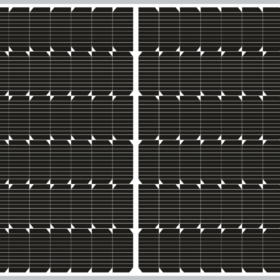
Indian manufacturer Gautam Solar has introduced 450 Wp mono PERC modules for rooftop PV installations. The modules feature 120 half-cut cells based on M10 wafers and offer a power conversion efficiency of up to 21.28%.
Monitoring degradation for 13 module types
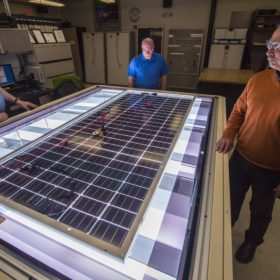
In a study that began in 2016, US scientists purchased 834 PV modules, representing seven manufacturers and 13 module types, and installed them in various climate conditions to observe their performance over time. The results show that, while plenty of opportunities still exist to extend module lifetimes and reduce performance loss in the field, reductions in the manufacturing cost of PV have not come with an increase in their degradation rate.
Sunora Solar unveils mono PERC module with 21.03% efficiency
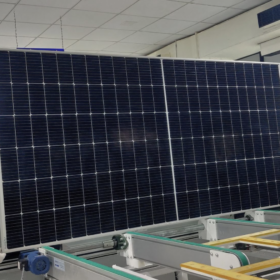
Sunora Solar’s new 144-cell solar module is available with power outputs ranging from 520 W to 550 W and a power conversion efficiency of 20.18% to 21.03%.
Role of UV in solar cell degradation
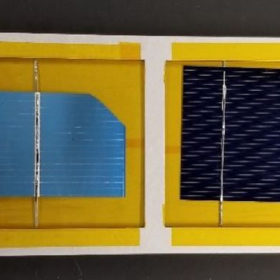
US scientists have tested a range of modern cell designs under strong ultraviolet light and have found that many of them, including p-type PERC and n-type heterojunction cells, are more susceptible to degradation than older back surface field designs. They noted that the rear side of bifacial cells may be particularly vulnerable.
‘The major solar players will shift from PERC to TOPCon’
US analyst Clean Energy Associates made some notable predictions in its Q4 survey of the world solar manufacturing market, including echoing predictions made elsewhere that the new polysilicon production capacity coming online now will help arrest the spike in solar panel prices.
