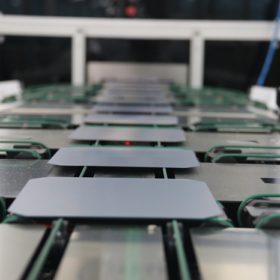
Cell prices have tumbled again since early June
The latest figures show the solar policy vacuum, and related dearth of demand in China earlier this year accelerated price reductions for cell makers. Although prices are expected to rebound in line with renewed thirst for solar in China, cell makers such as Tongwei are feeling the pain.
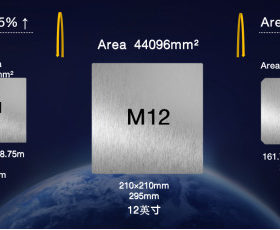
Big news as Zhonghuan Semiconductor unveils 12-inch super wafer
The manufacturer says its Kwafoo product improves efficiency and, if used in the optimal p-type PERC type of panel, could boast a module output of 610 W.

PV system prices fell 8.9% in Brazil in the first six months of the year
The cumulative capacity of 5 MW-or-smaller solar systems has reached 958 MW in Brazil, according to consultancy Greener. Around a third of that capacity was installed in the first half of this year, with projects relying on half-cell and PERC modules making up the largest share.

Chinese solar production figures continue to ramp up
Quasi-governmental body the CPIA has released first-half figures for the world’s biggest solar marketplace which show production volumes for export markets continuing to expand and the domestic picture set to rebound after public solar subsidy levels were published.

Meyer Burger seals $100 million HJT order, expects to hit break-even in first half
Swiss equipment supplier Meyer Burger has signed a contract to supply heterojunction cell manufacturing equipment to an unnamed North American manufacturer. The company also posted its preliminary results for the first half, posting a $14 million EBITDA loss but stating it expects to break even for the period after selling its wafer business.
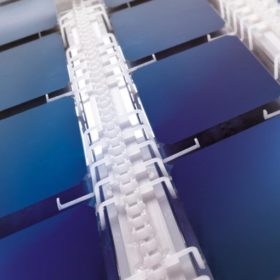
German PV equipment suppliers export 99% of their products
First-quarter figures from German engineering association the VDMA showed that, while orders picked up after a slow end to last year, almost all PV production equipment produced in the country is shipped abroad, with China the leading destination.
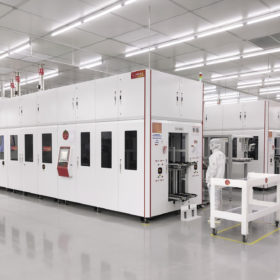
The weekend read: Atomic layer deposition storms market for PERC
Technology made in China competes with conventional plasma-based equipment to deposit the aluminum oxide layers at the heart of passivated emitter and rear contact (PERC) cells.
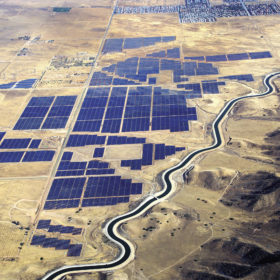
JinkoSolar delivers 258 MW for PV-wind project in Vietnam
The Chinese manufacturer has supplied 258 MW of monocrystalline PERC double glass modules to Trung Nam Group. It claims the project is one of the biggest solar-wind installations in the Southeast Asian country.
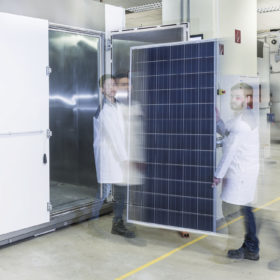
The weekend read: Is PERC still bankable?
Light-induced initial degradation in PERC modules is currently a subject of intense discussion, but tests at PI Berlin have shown that the problem is solvable. Founder and CEO Paul Grunow explains the effects, the approach, and the results.
Five hot PV module and cell takeaways from SNEC
While lacking the swarming crowds of previous years, the 2019 SNEC in Shanghai remained a focal point of the global PV industry when it comes to industrial solar cell and module manufacturing and technology. Here are five hot technology takeaways from the pv magazine team on the show floor and conference sessions.
