
Perovskites and microgrooves can revolutionize solar
Ambitious targets for solar energy generation present challenges to an industry keen to explore new avenues for solar production. Neil Spann, chief executive of UK thin film solar manufacturer Power Roll, describes a commercial solution to the problems of over reliance on silicon solar modules.

All-perovskite tandem solar cell with 27.4% efficiency, high voltage
A US-Canadian research group has built an all-perovskite tandem PV device with a record-breaking open-circuit voltage of 2.19 eV, which they achieved by reducing recombination at the electron transport layer.
Flashing solutions for perovskite tandem cells, modules
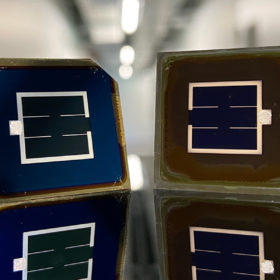
A new white paper by testing equipment specialist Wavelabs outlines key challenges that the solar industry will face when it comes to testing and characterizing perovskite-silicon tandem cells in manufacturing environments.
Inverted perovskite solar cell with 21.85% efficiency via surface modulator
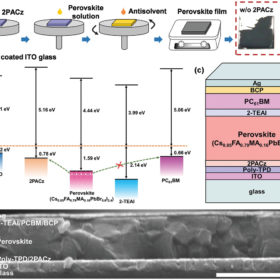
A UK research group has used surface modulators to reduce non-radiative recombination in perovskite solar cells. They used 2-TEAI organic halide salt to build a cell with high power conversion efficiency and stability.
Flexible all-perovskite tandem solar cell with 23.8% efficiency, improved voltage
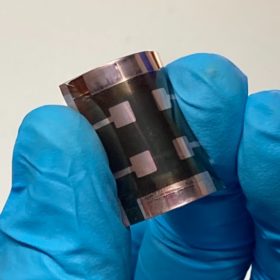
A Chinese-Swiss research group claims to have overcome two major challenges for the development of flexible all-perovskite tandem solar cells – voltage losses and the deposition process for the cell’s functional layers. They built a device with a high open-circuit voltage of 2.1 V.
Perovskite solar cell with copper electrode hits 20.1% efficiency
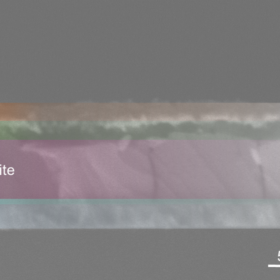
Chinese researchers have developed a new solar cell with a planar n-i-p structure and an indium tin oxide (ITO) substrate. It also has a tin(IV) oxide (SnO2) buffer layer, a perovskite layer, a hole transport layer (HTL), and a layer made of copper. It was able to retain around 92% of its initial efficiency after 1,000 hours.
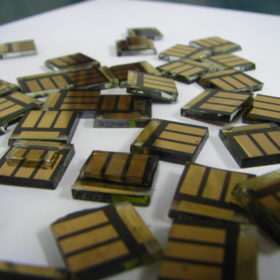
Reliance New Energy invests in US perovskite solar startup Caelux
The new energy unit of Reliance Industries has signed an agreement to acquire a 20% stake in California-based perovskite solar startup Caelux for $12 million.
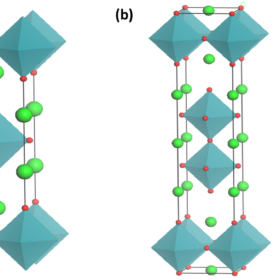
Prospects for Ruddlesden–Popper perovskite solar cells
A research group in the Netherlands has analyzed different manufacturing techniques for two-dimensional Ruddlesden–Popper perovskite solar cells. These cells offer improved photostability and environmental stability compared with their three-dimensional counterparts.

Inverted perovskite solar cell achieves 22.31% efficiency via novel electron-accepting interlayer
A Korean research group has built an inverted perovskite cell that is able to retain 91.7% of its initial efficiency after 1,000 h under standard illumination conditions. They built the device with an electron-accepting interlayer that also acts as charge transport.
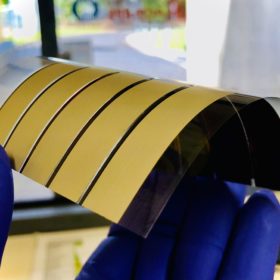
Flexible, roll-to-roll printed perovskite solar cell hits 16.7% efficiency
Australian scientists have demonstrated a flexible perovskite solar cell using roll-to-roll compatible “printing” type processes, which could potentially be applied in large-scale manufacturing. Of particular note is the development of a viable roll-to-roll process to deposit the electrode layer, which has thus far been a major challenge. Cells fabricated by the group achieved a maximum efficiency of 16.7%.
