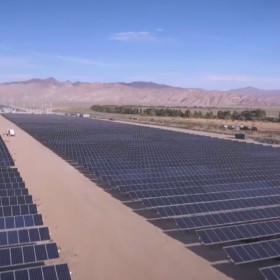
Los Angeles says “Yes” to the cheapest solar plus storage in the USA
Los Angeles’ municipal utility has voted 5-0 to approve a 25-year contract with a 400 MWac solar plus 300 MW / 1.2 GWh energy storage facility, with the aggregate price of the electricity from the project at 3.962¢/kWh.

Recovering interest rates may raise large scale solar electric price 11%
Renewables investment may by hit by rising interest rates despite the falling cost of clean energy tech just as fossil fuels avoid the impact of rising base rates.

Hybrid solar and micro-grids for Guyana
The nation’s cabinet has approved new contracts for solar projects under net metering rules across several regions. Investments include solar micro-grids for disconnected areas, grid-tied installations and hybrid projects.

Brazil sets $51/MWh solar ceiling price in A-6 auction
Some 29.7 GW worth of PV project capacity will compete in the procurement on October 18. Selected solar projects will have to begin delivering power in 2025 and will be awarded a 20-year power purchase agreement.

French start-up launches solar engine
The invention converts the energy produced by PV cells directly into mechanical motion without the need for batteries or power electronics. Its developers claim the robustness of the solar motor can drive water pumps and ventilation turbines for more than 20 years without the need for maintenance.

Solar powered elevator unveiled in Spain
The ‘green’ version of the ION Green Solar lift – designed, developed and manufactured in Spain by Fain Ascensores – can cut carbon emissions 86%. That figure rises to 100% with the PV-powered ‘solar’ model.

Singulus lowers outlook after delayed CNBM order
The German PV equipment provider will not achieve the sales and earnings targets set for this year. CNBM is not expected to place orders for the expansion of its CIGS thin-film production operations in China until the fourth quarter.
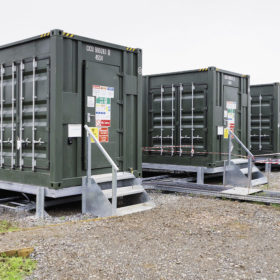
Big storage comes to Ireland
A 200 MW storage project is being developed by Hanwha Energy Corporation and Lumcloon Energy. The €300 million facility is intended to stabilize the grid to host more renewable energy capacity.

Zimbabwe launches 235 MW solar tender
The Infrastructure Development Bank of Zimbabwe has issued a request for proposal to seek partners for the development and construction of seven solar parks, with a combined generation capacity of 235 MW, plus two mini-hydro power projects.

Japan’s largest floating PV plant catches fire after Typhoon Faxai impact
Kyocera’s 13.7 MW floating project at the Yamakura Dam was damaged by 120mph winds the typhoon brought to the coastal city of Chiba. Firefighters said the blaze may have been generated by the strong heat produced by panels stacking up.
