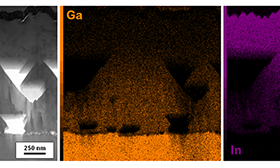
Luxembourg scientists provide new insight on how sodium can be used in thin film solar cell manufacturing
The research team found that sodium, contrary to common belief, does not decrease per se indium and gallium interdiffusion, but instead hinders intergrain diffusion by segregating at grain boundaries.
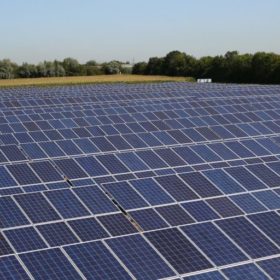
Austrian utility Wien Energie begins solar offensive
Austria’s largest power provider announced a plan to invest around €100 million in solar and €15 million in recharge stations for electric vehicles over the next five years. The company aims at investing mainly in residential and C&I projects.
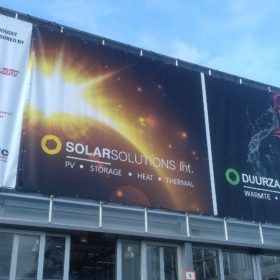
Four key takeaways from the Solar Solutions exhibition in the Netherlands
The Dutch solar fair has now taken the shape of an international event, due to the increasing number of big players attracted to the Netherland’s PV market, and the high level of professionalization that has been reached by the local ecosystem of installers and distributors. Although a few uncertainties on the possible changes of the current regulatory framework are suggesting caution, solar across all of its segments is clearly set to become a mainstream source of energy nationwide.
Meyer Burger reports €67.8 million loss for fiscal 2017
The Swiss PV equipment manufacturer recorded a loss of around €68 million last year. Although Meyer Burger was able to slightly increase sales, the EBITDA margin was below 3%. This year, the company is aiming for an EBITDA margin of 10%, in order to return to profitability.

Somalia lays ground for solar development
The United Nations Development Programme (UNDP) office in Somalia has issued a Request for Proposals for the financing of a skills development program in the solar energy sector in Mogadishu, Kismayo and Baidoa.
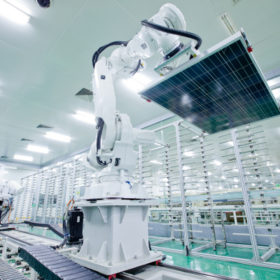
JinkoSolar posts strong shipments increase for 2017, but lower profits
Last year, the Chinese solar PV module maker shipped 9.8 GW, and achieved a revenue of US$4 billion. Both gross and net profit, however, declined due to lower ASPs, higher polysilicon prices and increased output from OEM partners.
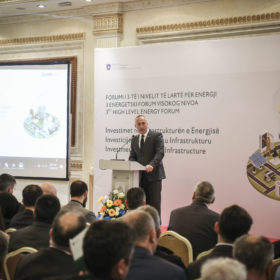
Kosovo embarks on renewables path
Although the Balkan country has recently approved the construction of a new coal power plant, Prime Minister, Ramush Haradinaj has said he intends to open the energy market to solar and wind power, an action that was recommended by the EU a year earlier.
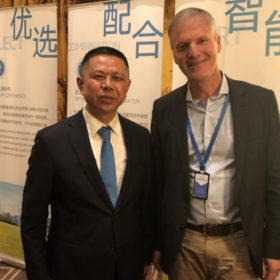
Trina Solar launches TrinaPro Integrated Solution
To mark its 20th anniversary this year, Trina Solar launched its TrinaPro integrated PV solution at a ceremony attended by Chinese and foreign participants. Trina Solar’s founder and CEO, Jifan Gao noted this important move from not only supplying top-notch PV components, such as high-efficiency cells and modules, but also supplying integrated solutions capable of further reducing PV’s already low levelized cost of energy (LCOE).
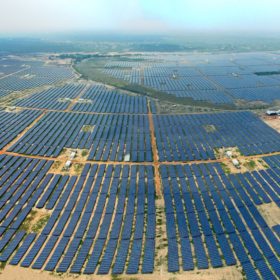
India: Adani to expand its module and cell manufacturing facility to 2 GW
In an exclusive interview, Adani Green Energy Ltd (AGEL) CEO, Jayant Parimal, tells pv magazine the renewable energy company is looking to expand both its module and cell manufacturing capacity to 2 GW. Moreover, it is looking to develop floating solar PV projects in its home market, India, in addition to continuing its focus on the utility-scale solar and wind sectors.
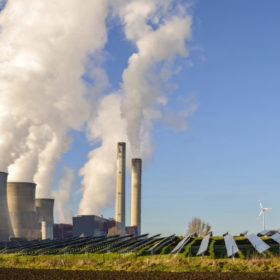
PV has the lowest LCOE in Germany, finds Fraunhofer ISE
According to Fraunhofer ISE experts, PV’s Levelized Cost of Energy (LCOE) currently ranges between €0.0371 and €0.1154 per kWh in Germany. The potential for further cost reductions is vast, the researchers add.
