
France’s PV capacity tops 7.13 GW
French cumulative PV capacity has surpassed 7 GW. In 2016, however, the market registered a 62% decrease in new installations, with the figure coming in at 559 MW. PV plants over 250 kW covered almost two thirds of the new capacity installed last year.

Meyer Burger continues strong start to 2017 with $23.7 million PERC upgrade order
The PERC upgrade cycle continues at pace in 2017, with it continuing to deliver orders to Swiss equipment supply giant Meyer Burger. Today it announced a new $23.7 million order for an unnamed Chinese manufacturer.
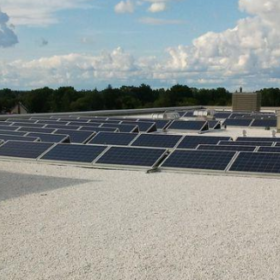
Canada: Soventix to develop up to 140 MW across six sites
German-based project developer Soventix is set to develop up to 140 MW of PV in Alberta, Canada. The company is currently planning six projects with capacities ranging from 15 – 45 MW near the cities of Calgary and Edmonton.

ARENA backs deX project to deliver open-source digital marketplace coupling distributed solar-plus-storage and grid services
The Australian Renewable Energy Agency (ARENA) is providing $450,000 (US$346,000) towards the Decentralized Energy Exchange (deX) project, which aims to produce an open-source software platform on which grid services can be provided and monetized by distributed battery storage. A combination of Australian utilities, research bodies, and startups are collaborating on the $930,200 ($715,000) deX project.
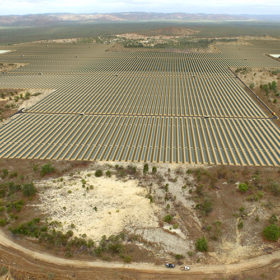
Australia: 320 MW of solar farms commence construction in Victoria
Three PV power plants worth a combined 320 MW have begun construction in the southeastern Australian state of Victoria. A joint venture between Overland Sun Farming and the UK’s Island Green Power is behind the AU$500 million (US$384 million) development, which is going ahead despite the projects not having yet signed PPAs.

Greece to tender PV capacity in December
Greece will run its first renewable energy tender on 12 December. It is a pilot tender for a total capacity of at least 40 MW, which is reserved solely for solar PV projects.
Solar Cells Hellas reaches 20 MW of installed capacity
Solar Cells Hellas Group, the biggest PV producer in Greece, connected to the grid in January three new photovoltaic parks of a 3.19 MW total installed capacity.

Portuguese PV grows steadily
A report published by the Portuguese energy regulator, the DGGE (Direcção Geral de Energia e Geologia), on Thursday January 10, says cumulative solar power capacity in Portugal at the end of October 2012 reached 193.3 MW.
Stanford team wins MIT Clean Energy Prize with new solar material
C3Nano, Inc., a company founded by Stanford University students, has won the 2010 MIT Clean Energy Prize for the development of a new transparent electrode material, which, it is claimed, will make photovoltaic solar panels both cheaper and more efficient.
