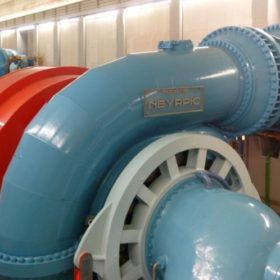
Serentica Renewables, Greenko sign 1.5 GWh pumped hydro storage deal
Serentica Renewables says it will source 1.5 GWh of pumped-hydro storage capacity from Greenko’s upcoming projects in the Indian state of Andhra Pradesh and Madhya Pradesh, in order to provide power to industrial offtakers.
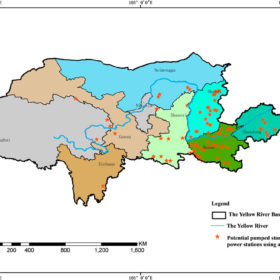
Pumped hydro storage for abandoned mines in China’s Yellow River basin
Researchers from China have discovered that 91 abandoned mines in China could host pumped hydropower storage facilities, with a total installed capacity of 15,830 MW.
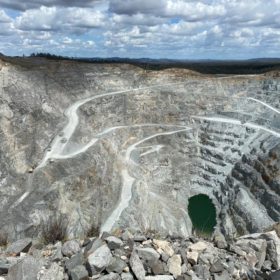
Australian state expedites development of pumped hydro project at gold mine
A plan to build a 2 GW/20 GWh pumped hydro project at an old gold mine in the Australian state of Queensland has been declared a “coordinated project,” in order to fast-track the plan.
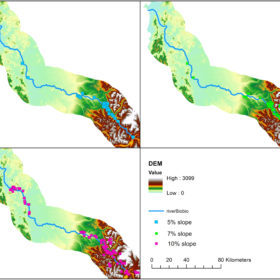
Pumped hydro storage for rivers, coastal lines
Scientists in Germany have developed a new methodology to identify suitable areas for pumped hydro storage projects close to rivers or shorelines. Their new method considers parameters such as the minimum required flat area for the reservoir, the allowable slope of the terrain, the minimum head, and minimum required head to distance ratio between two reservoirs.
Pumped hydro storage takes shape in the Philippines
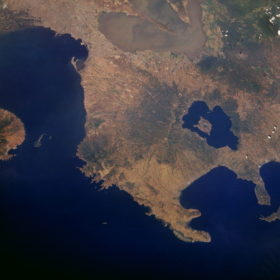
Prime Infra recently acquired a 500 MW pumped storage hydropower project in Rizal province in the Philippines. The company is also developing a 1.4 GW facility in the country.
Australian pumped hydro storage project secures funding
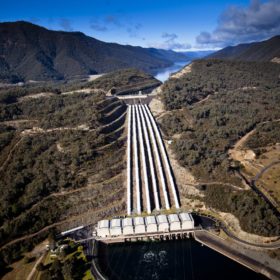
The government of New South Wales, Australia, has announced funding for five pumped hydro schemes spread across the state, as it looks to deliver large-scale energy storage and firming capacity.

Storing renewables in soil mounds via water balloons
Scientists in Denmark have developed a storage technology that utilizes large underground water balloons and the pressure of the soil to activate a turbine to generate power. They are currently building a first 10 m x 10 m demonstrator to select critical technologies related to the membrane and to the construction of the “movable hill” that will form the terrain part of the battery.
Polish utility PGE wants to couple 200 MW/820 MWh of battery storage with existing pumped-hydro facility
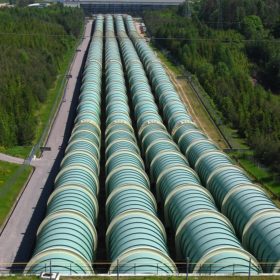
The project is located 10 km from the Baltic Sea, where PGE is planning to build offshore wind farms with a total capacity of 3.5 GW.
Massive pumped-hydro storage facility comes online in Switzerland
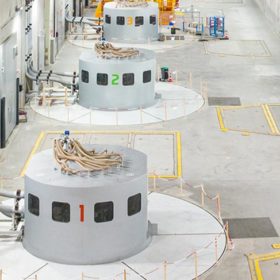
The Nant de Drance facility began commercial operations on July 1 and is currently one of Europe’s largest pumped-hydro storage stations.
New pricing mechanism for pumped-hydro storage in India
A new report recommends a differential pricing mechanism for pumped-hydro energy storage (PHES) projects in pumping (off-peak operation) and generating mode (peak operation).
