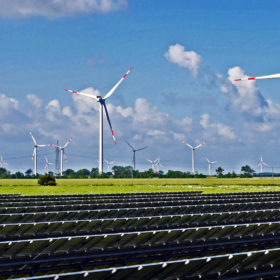
Indian government asks utilities to maintain payments to power producers
The clarification came after states across the country reacted to the power ministry’s recent call for a moratorium on conventional power payments by stopping payments and curtailing renewable power.

Australian rooftop solar surged to record highs before lockdown
Research by Green Energy Markets shows that the Australian rooftop PV market remained healthy throughout the first three months of 2020. According to STC data, more than 30,000 rooftop installations were registered in the month, for a total of close to 250 MW of capacity. And then came Covid-19.
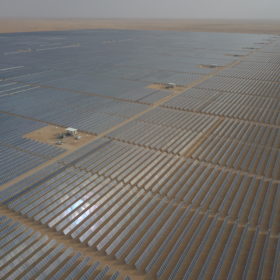
Lowest shortlisted bid in Saudi 1.47 GW tender was $0.0161/kWh
The shortlisted developers are EDF, Total, ACWA Power, Masdar, First Solar, Marubeni, and Al Blagha Holding.

Golden PV panels for balcony solar systems
German manufacturer a2-solar has supplied 240 solar panels for the renovation of an old building in Bern, Switzerland. The modules, which are being integrated into 96 balconies, feature different transparency options and color variations.
Covid-19 halting European PPA market – Part IV
In a recent chat with pv magazine, Jason Tundermann – vice president of business development at U.S. trading advisory service LevelTen Energy – predicted a better-than-expected scenario for corporate clean-energy PPAs on the Old Continent. He said the net value of long-term PPA offers has not dropped dramatically, offering hope to corporate buyers.
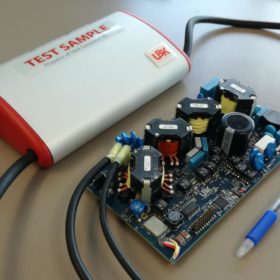
All-in-one device integrating a microinverter and optimizer
The so-called Optiverter is an all-in-one residential solution developed by startup Ubik Solutions and researchers from Estonia’s TalTech Power Electronics Research Group. The developers claim that the new solution can provide 30% more power than traditional microinverters under partially shaded conditions.
No such thing as ‘next-generation’ modules
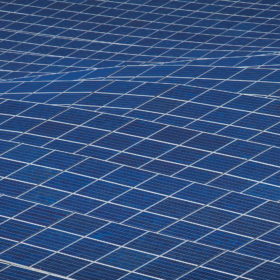
According to one Dutch scientist, the development of PV technology in recent decades should be seen as an evolutionary process, rather than the constant emergence of new generations of equipment.
Giant transformers for grid debottlenecking
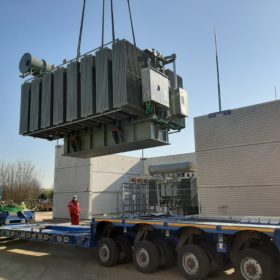
Dutch power company Liander has installed two large transformers at a distribution station in Ulft, in the province of Gelderland. The devices should provide more room for renewables on the network from next year.
Vertical PV project on dam in Alps gets approval
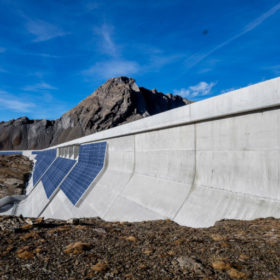
Swiss developer Axpo is now modifying the design of the 2 MW plant and is expected to make a final decision on construction later this year. It is currently in negotiations with potential electricity consumers.
Solar pump moved by fuzzy logic
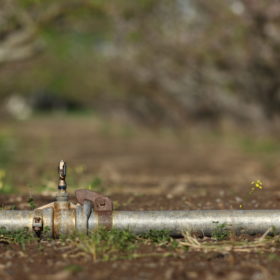
Researchers in the United Arab Emirates have proposed a PV-powered irrigation system that runs on a fuzzy logic-based algorithm, with a remote-control wireless monitoring system interface.
