
Canadian Solar claims 23.81% efficiency for n-type poly module
The Chinese-Canadian manufacturer said the new results improve upon its previous record by around 1%. The achievement has been certified by Germany’s Institut für Solarenergieforschung GmbH (ISFH).
Big solar going back to Romania
Complexul Energetic Oltenia, a Romanian coal-fired power producer, plans to build 310 MW of PV capacity across four sites at one of its facilities. The projects are part of the company’s restructuring efforts and decarbonization plan.
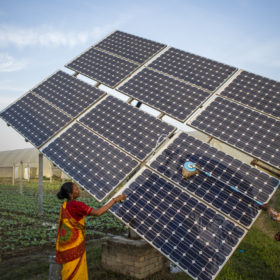
Solar will turn vicious water-energy-climate cycle into virtuous loop
The International Water Management Institute is promoting the Solar Irrigation for Agricultural Resilience (SoLAR) initiative to expand the use of solar irrigation systems throughout Bangladesh, India, Nepal, and Pakistan. Proponents of solar irrigation pumps say that they can have a strong positive impact on groundwater.
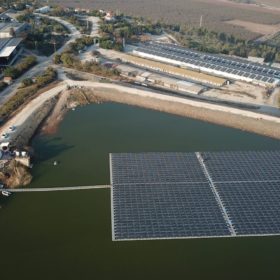
Floating PV arrives in Israel
German contractor Belectric has deployed a 480 kW array on a reservoir near the Mishmar HaEmek kibbutz in northern Israel.

The ambiguous impact of battery storage on emissions
U.S. researchers have investigated whether energy storage deployment could actually drive up greenhouse gas emissions in the short term in some energy markets. The fact the existing literature considers only the dispatch of energy from storage facilities in the current fossil fuel-renewables energy mix, though, could understate the long-term emissions reduction benefits of such facilities.

The fossil fuel giant and agrivoltaics
French oil and gas company Total is planning to install nearly 500 MW of solar generation capacity on farmland by 2025. The power company will work with French seed and agricultural supply company inVivo group to install agrivoltaic systems.
Indonesia’s first PPA for large scale solar
Coal producer SESM is planning a 10 MW off-grid hybrid solar plant in South Sumatra. A palm oil producer will buy the solar electricity generated under a 20-year power purchase agreement.

A 20-year power supply deal for 238 MW of solar in Brazil
French developer Voltalia has contracted to supply solar power to Brazilian thermoplastic resin company Braskem. The solar plant which will generate the electricity is planned as an expansion of two facilities allocated by the Brazilian government in a public renewable energy auction.
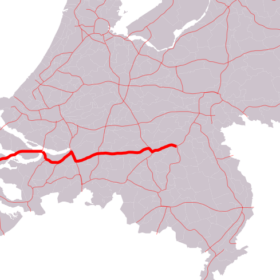
Planned 48 MW Netherlands solar plant could be another solar highway
It is not clear whether panels will line the Rijksweg 59 highway or be sited next to a stretch of it. UK oil giant Shell is planning the installation as part of a renewables cluster to also feature wind power.
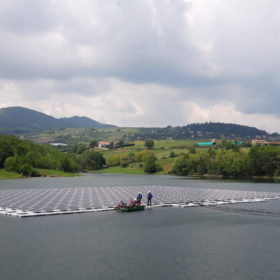
Another 30 MW of floating solar ready to set sail in France
The commune of Châteauneuf-du-Rhône, in the French department of Drôme, has signaled its approval of a floating PV project submitted by the Compagnie Nationale du Rhône which still requires a permit from the planning authorities.
