
Building Energy to lay off 28 employees in Italy
The Italian developer has announced most of its 37-strong Italian workforce will be laid off without spelling out why.
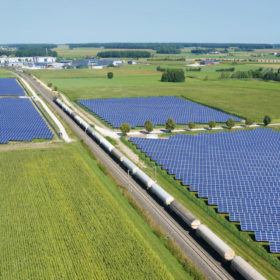
Germany’s special PV tender concludes with average price of €0.0568/kWh
Tariffs ranged from €0.0470 to €0.0620 as the solar power price rose from the last national procurement round, which settled at €0.0459-0.0520 in October for an average €0.0490/kWh. Some 501 MW of generation capacity was allocated in the latest exercise.

All-inorganic perovskite solar cell hits 16.1% efficiency
Researchers from the City University of Hong Kong have developed an all-inorganic perovskite cell with an electron-pair donor which offers a pair of non-bonding electrons. The cell was developed by applying that ‘Lewis base’ small molecule to passivate the inorganic perovskite film.
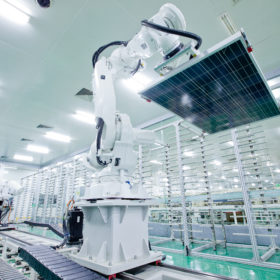
Jinko claims two more efficiency records for bifacial panels
The Chinese manufacturer has achieved conversion efficiencies of 21.82% and 22.49% for its p-type PERC and n-type HOT bifacial panels, respectively. The results were confirmed by Germany’s TÜV Rheinland.
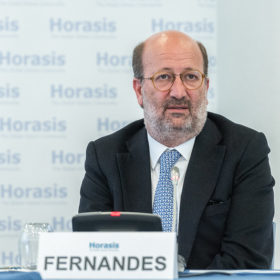
Portugal pushes back solar auction to March
The minister of environment and energy transition has told parliament two auctions for large scale solar will be held this year, with a new procurement round now planned. The minister revealed energy storage may play a part in the capacity tenders.

Mind the gap
Fire safety engineering researchers have demonstrated increasing the gap between the modules of commercial PV arrays and flat roof surfaces is a decisive factor in reducing fire risks. Experiments have identified a critical gap height below which flame spread rate increases significantly.
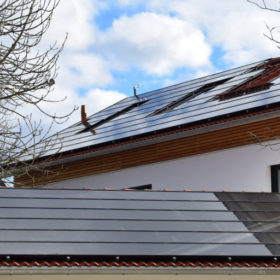
Hard times for thin-film PV module makers as Crystalsol and Calyxo file for insolvency
Calyxo, a German cadmium telluride solar module manufacturer, has filed for insolvency for the second time, despite the recent emergence of new prospective investors. Meanwhile, Crystalsol – an Austrian flexible solar panel maker – has also initiated insolvency proceedings, due to losses of roughly €7 million.
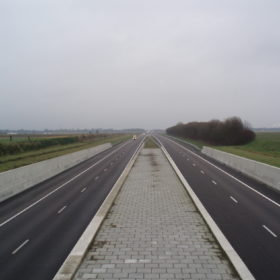
Solar park taking shape along 40 km of road in the Netherlands
The Dutch water management agency plans to install solar panels along both sides of the A37 highway in Drenthe province, as well as on the median strip, to cover 300 hectares in total. The project is part of a plan to build projects on state land, as the domestic PV industry continues to search for alternative surfaces on which to deploy solar.
Poland tops 1.3 GW of PV capacity
With around 300 MW of newly installed capacity in the final quarter of 2019, Poland has maintained its promise to reach 1.3 GW of solar by the end of December. New PV additions reached more than 800 MW last year.

South Korean government reassures domestic PV industry
The country’s Ministry of Trade, Industry and Energy (MOTIE) has provided new market share figures for the domestic PV sector that contradict recent media claims that Chinese manufacturers have been aggressively ramping up their local presence at the expense of Korean module makers. The government has also confirmed plans to prioritize PV projects made with low-carbon, high-efficiency modules.
