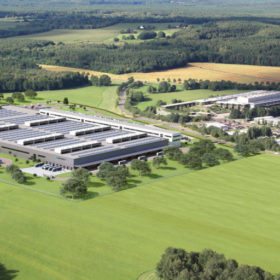
Mercedes, Shell announce seperate private PPA agreements
Mercedes Benz has announced plans for all of its German factories to be supplied with CO2 free energy by 2022. Meanwhile, Renewables investment firm Octopus Energy has signed a five-year PPA with Shell Energy Europe to provide the global energy giant with power from several unsubsidized PV projects it is constructing in Italy.
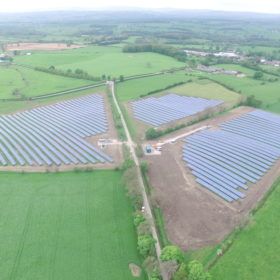
Solar ‘could soon be UK’s cheapest source of energy’
The U.K. Solar Trade Association has published a new assessment, finding that the cost of generating solar electricity in the British Isles has already fallen far below its earlier predictions, and could reach GBP 40 (US$50)/MWh by 2030.
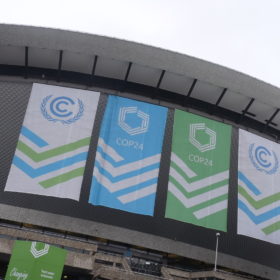
COP24 live blog – Day 3
pv magazine’s Max Hall is back on the beat at COP24 in Katowice for more climate change related shenanigans, and will be endeavoring to uncover any solar angles he can winkle out in the vast venue.

COP24 live blog – Day 2
pv magazine‘s Max Hall will be pounding the vast spaces of the COP24 venue in Katowice to bring you the latest developments in Poland and trying to shine a light on solar’s presence here.

COP24 live blog – Day 1
Max Hall will be attending the COP24 climate change conference in Katowice, Poland on behalf of pv magazine and bringing you all the developments as they happen, as well as sniffing out anything solar related.
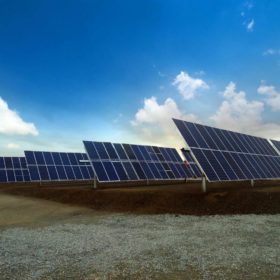
Wind, solar could be self-financing by 2025 under current European electricity market design
According to a report from the Centre on Regulation in Europe (CERRE), lower capital costs for large-scale wind and solar projects, and much higher fossil fuel and carbon prices could lead to renewables becoming self financing by 2025. If these conditions do not materialize, more auctions and tenders may still be needed.
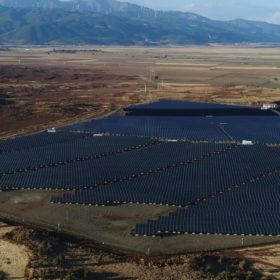
Turkey hits 5 GW of registered PV capacity
A total of 1.58 GW of new PV systems have been registered with Turkey’s grid administrator in 2018. Of this new capacity, 1.51 GW is in the unlicensed project segment, for arrays up to 1 MW in capacity, while the remaining 63 MW is for larger projects that had been successful in bidding for PEKA auctions.
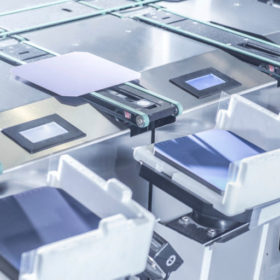
Sentis Capital urges Meyer Burger to establish GW-scale HJT production
Meyer Burger’s largest single shareholder has requested the company change strategy. Sentis Capital has urged the Swiss technology company’s board to raise sufficient capital for it to set up its own GW-sized production facility for its heterojunction and tandem cell PV technology. Meyer Burger has responded that it is view of only one shareholder.
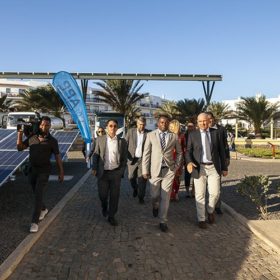
Cape Verde commissions solar plant, sets 2030 RE target at 50%
Although renewable energy targets have been revised down, the archipelago’s government said that wind and solar will still see their share increase considerably over the next decade.

Self-tracking solar panels, inspired by a lizard’s feet
Scientists at Harvard University have developed a type of material that can be programmed to move in response to various stimuli, including light. One possible application, says the group, could be in solar panels with integrated microstructures that track the sun without any energy input.
