
Brazil plans RE auctions for isolated regions
The Brazilian government is planning to resort to renewable energies to meet power demand in the non-interconnected areas in the north of the country. Meanwhile, another Brazilian state, Santa Catarina, has decided to introduce the ICMS exemption for solar DG.
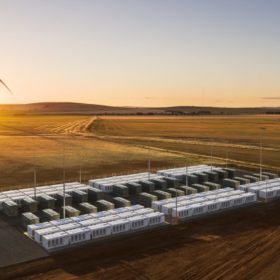
Neoen’s 50 MW hydrogen electrolyser at proposed wind, solar facility in Australia receives grant
French firm Neoen has begun development on a hydrogen electrolyser to be colocated alongside a 150 MW wind project and 150 MW solar farm. The project has been awarded a grant of AU$1 million by the South Australian Renewable Technology fund, with more funding yet to be approved.

Australian researchers demonstrate first working proton battery
Scientists at the Royal Melbourne Institute of Technology (RMIT) have demonstrated the first working example of a “proton battery”, which utilizes a carbon electrode and a reversible hydrogen fuel cell for the storage of energy. The scientists say their small prototype has already demonstrated similar storage capacities to commercially available lithium-ion batteries, with plenty of potential for further optimization.

Libya resumes efforts to take advantage of its solar potential
Libya’s Misurata Free Zone is resorting to solar to increase its energy independence, with support being provided by U.S.-based energy consultancy, iQ Power.
Kazahkstan tenders 290 MW of solar
Overall, new auctions launched by the Kazakh government will allocate 1 GW of renewable energy generation capacity, including 620 MW of wind power plants.
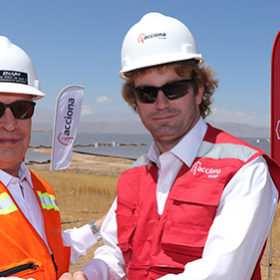
Acciona secures solar PPA from Chilean mining company ENAMI
The National Mining Company of Chile (ENAMI) will be the first Chilean mining company that will have all of its electricity demand covered by clean energy sources. Supply of electricity under the long-term PPA will begin in April 2018.
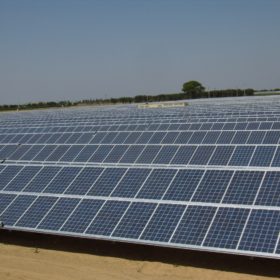
Solar Ventures plans 1 GW of ‘grid-parity’ projects in Italy, Spain
The Italian solar plant operator has decided to re-enter the Italian PV market, as costs for large-scale solar are now under €1 million/MW and conditions for unsubsidized projects are improving. Overall, it plans to invest around €800 million in solar in the two southern European countries over the next five years.
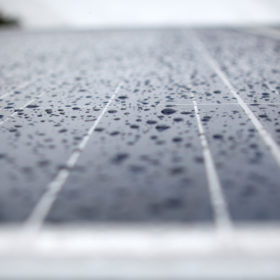
Chinese breakthrough in harvesting energy from the sun and the rain
A team of scientists based at the Jiangsu Key Laboratory for Carbon-Based Functional Materials and Devices has integrated a silicon solar cell with a device that generates power from the motion of raindrops, an innovation which could greatly enhance performance in cloudier climates.

Manz returns to profitability
Thanks to a one-off effect in the solar segment, the company was able to achieve a record turnover of €325 million in 2017.
Sweden allocates $60 million in solar rebates for 2018
The Swedish Energy Agency will initially allocate 200 million SEK (around US$24 million). Two further tranches of 200 million SEK and 100 million SEK, respectively, will be assigned in April and in the fall. The funds will be used to finance small rooftop PV projects under the country’s solar rebate scheme.
