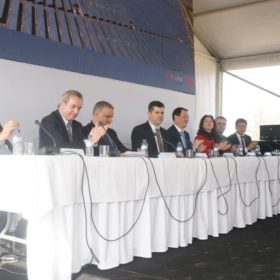
Welink and CTIEC bag EPC contract to build 220 MW PV plant in Portugal
Work on this huge solar project without subsidies is expected to begin in the first quarter of this year.
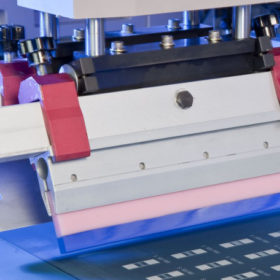
Materion completes acquisition of Heraeus target materials business
German technology group Heraeus and U.S. company Materion Advanced Materials have announced the completion of the latter’s acquisition of the target materials business belonging to Heraeus.
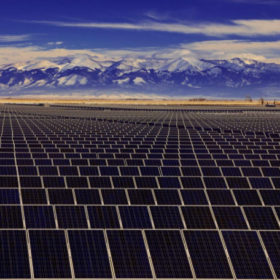
TerraForm raises another $86 million for Ontario solar projects
The troubled yieldco has managed to raise additional capital for four solar projects in Canada, as we wait on word of its settlement with SunEdison and potential sale to Brookfield.
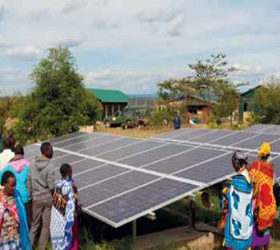
EU supports Africa’s renewable energy and solar development with €300 million
The European Commission has decided to support the Africa Renewable Energy Initiative with €300 million ($317.7 million). The funds are intended to leverage up to €4.8 million ($5 billion) and to help finance 19 renewable energy projects totaling about 1.8 GW.

Singulus receives new order for CIGS production equipment
Singulus technologies has announced the signing of a contract worth more than €20 million to supply systems to a Chinese module manufacturer, the subsidiary of a major public energy company.

Colombia issues legislation for self-consumption
The Colombian government has published the decree that regulates the installation of renewable energy and solar power systems for self-consumption. The new regulation, which applies to systems up to 100 kW, simplifies the procedures for grid-connection and sale of excess power.
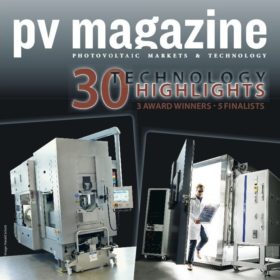
pv magazine Technology Highlights: Jury announcement
pv magazine is very pleased to announce the six-member jury that will meet to decide this year’s Technology Highlights feature and award. The award recognizes excellence in PV production materials and equipment supply.

Enel Green Power converts Italian module factory to production of bi-facial, heterojunction technology
Italy’s ENEL will invest €80 million ($84.4 million) to convert its PV module manufacturing facility, in southern Italy, from amorphous silicon to bi-facial heterojunction modules. ENEL expects to launch its new modules in 2018 and to reach a capacity of 240 MW in 2019.
Norwegian solar market sees the light with 366% growth in 2016
Around 11 MW of new PV capacity was installed last year in Norway. The volume of new installations grew by 366% compared to 2015. This growth was mainly driven by the country’s regulation for self-consumption and the green certificate scheme.

Neo Solar Power confirms it will gradually exit polycrystalline production
The Taiwanese solar cell maker has confirmed to pv magazine that it will exit the polycrystalline PV business and will focus on its monocrystalline products. The company intends to gradually lower its polycrystalline PV capacity.
