
Lithuania devotes €40 million for solar rebates in 2022
The Lithuanian government has decided to increase the 2022 budget for the solar rebates by €35 million after the initial phases of the program showed strong success among homeowners.

Solar for churches
Churches use energy mostly during the day, which makes them ideal buildings to deploy solar panels. Scientists in the United Kingdom have assessed the financial viability of a rooftop PV project for Bath Abbey and found that it could become profitable after 13 years.
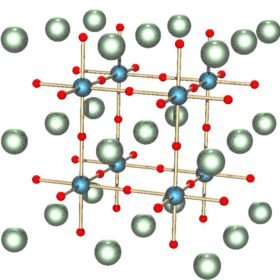
Perovskite solar cell with 24.18% efficiency via low-dimensional perovskitoids
Chinese scientists used perovskitoids as 1D and 0D capping layer materials for the cell’s perovskite layer. These materials enabled an effective and all-around passivation of the perovskite surfaces and grain boundaries, which prevents undesired Shockley-Read-Hall recombination and material degradation. The device achieved a power conversion efficiency of 24.18%, an open-circuit voltage of 1.151 V, a short-circuit current of 25.96 mA/cm2, and fill factor of 80.91%.
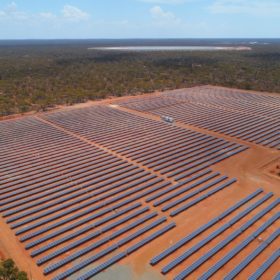
PV to deliver 100% renewables at Australian mine
Remote power generation specialist Zenith Energy will build upon its renewable energy options at Western Australian miner IGO’s Nova nickel site to demonstrate that it is possible to use 100% renewables to meet the demands of an operational mine site.
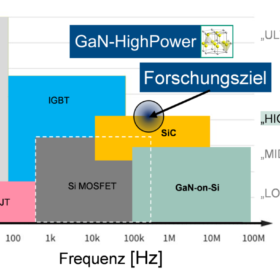
German consortium develops gallium nitride grid-supporting inverters
Researchers from German research institutes and companies are working on applying semiconductors based on gallium nitride (GaN) to string inverters with the aim of enabling cost and weight reduction while maintaining very high efficiency. These devices are expected to support grid operations through faster switching processes.
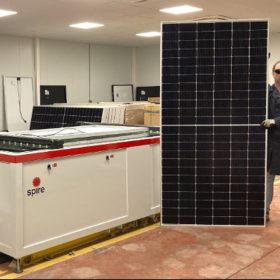
Solar simulator for high-power photovoltaic modules
Spire Solar Iberia has developed a state-of-the-art XL solar simulator that is able to measure the maximum power of photovoltaic modules of any size with high precision and to identify those with low performance.
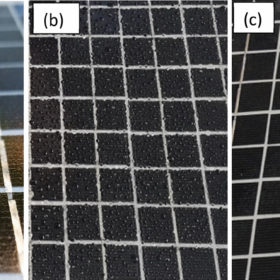
Titanium wires-based anti-soiling coating to improve solar module yield
Researchers in Thailand have developed an anti-reflective and anti-soiling coating for commercial solar modules that is claimed to increase power yield by over 6%. The coating has photocatalytic properties that make the organic compounds adsorbed on the solar module surface decompose, thus preparing them to be easily washed off by rainwater.
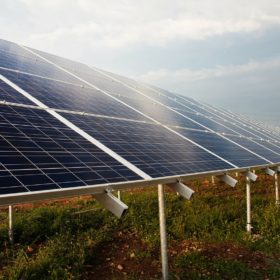
Indian state of Maharashtra launches 865 MW tender for small solar parks
The tendered capacity is expected to provide day-time power to agricultural consumers. The selected projects will range in size from 2 to 10 MW and will be awarded a 25-year power purchase agreement.
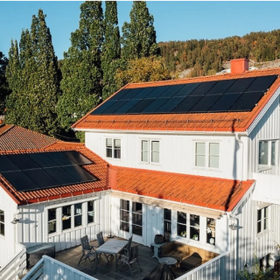
Norway increases support for residential PV
Norway’s clean energy agency Enova will increase the maximum PV system size eligible for rebates from 15 to 20 kW and the maximum subsidy amount from 1,250 to 2,000 NOK ($226.7) per kW installed. In addition, new subsidies of up to 10,000 NOK will be introduced for energy management systems that are often installed alongside solar arrays.
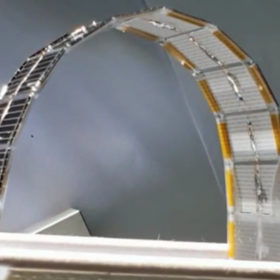
Sun-tracking tessellated photovoltaic array for use in space-restricted areas
Created by scientists in Korea, the shape-transformable 3D PV system is claimed to be able to increase electricity yield by 60% over a day compared to a fixed flat panel due to the shorter shadow length and the bifacial effect obtained during shape transformation. The proposed system doesn’t need any machinery to follow the sun and its developers said it would be a perfect solution for both urban and rural environments with limited space.
