
US-made solar panels could cut emissions by 30%, says study
Reshoring crystalline silicon PV panel manufacturing to the United States by 2035 could cut greenhouse gas emissions by 30% and energy consumption by 13% from 2020 levels, according to scientists from Cornell University.
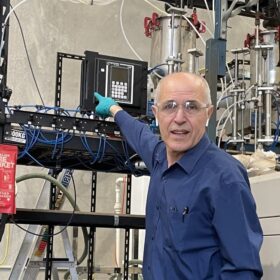
Australia startup announces nanosilicon tech that may help build better batteries
Australian materials tech developer Kinaltek has unveiled a one-step production process that it says can convert common silica powders into battery-grade nanosilicon for less than 5% of the cost of existing technologies. The innovation paves the way for the use of silicon nanoparticles in high-performance lithium-ion batteries.
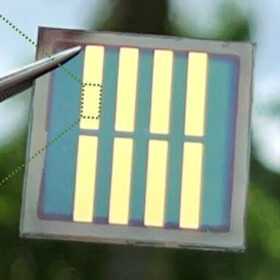
Paving the way for lead-free perovskite solar cells
Researchers in Singapore have developed a perovskite solar cell via a new method to synthesize the capping without using lead. The cell is capped with a zinc-based compound and reportedly has a conversion efficiency of 24.1%.
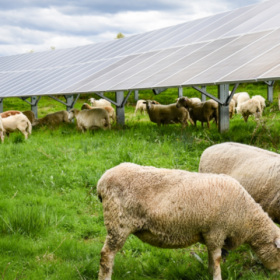
Solar grazing methods a centerpiece of inaugural agrivoltaics conference
Dan French, executive producer of the Solar Farm Summit, told pv magazine USA that more than 500 farmers, manufacturers, and community solar developers likely attended the first US agrivoltaics conference in Chicago last week.

Field data on heat pump efficiency, cold climate performance
Energy Systems Catapult has released interim data from air-source heat pump field monitoring in the United Kingdom between November 2020 and August 2022. Figures show that heat pumps are three times more efficient than gas boilers and that their median coefficient of performance (COP) on cold days is 2.44, compared to 2.80 year round.

India deployed 2.5 GW of large-scale, unsubsidized solar capacity in 2022
India installed 7.7 GW of cumulative, open-access solar capacity by Dec. 31, 2022, following record annual additions of 2.5 GW.

Australian utility unveils plans for 800 MWh big battery
Synergy, a utility owned by the Western Australian government, has revealed plans to build a new 200 MW/800 MWh battery energy storage system in the city of Kwinana, in order to support the state’s main grid and enable the uptake of more renewables.
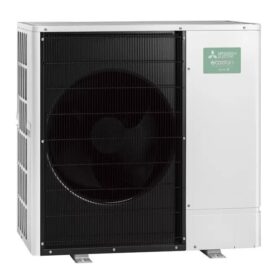
Mitsubishi unveils propane heat pump for residential applications
Mitsubishi Electric has developed an air-source heat pump that uses propane (R290) as the refrigerant. It can produce between 5 kW and 8.5 kW of heat and domestic hot water to a temperature of up to 75 C.

UK cathedral to install solar, storage system
York Minster, one of the largest cathedrals in Northern Europe, has secured approval to install 199 solar modules on its rooftop. The system will generate at least 75,000 kWh per year and will be paired with batteries.
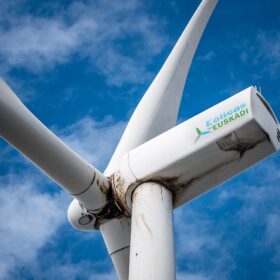
Solar mounting structure made of recycled wind turbine blades
Spain’s Acciona Energia is using fiberglass from the blades of used wind turbines to make the torsion beams of solar trackers. It is using the tech as part of a pilot project in Badajoz, Spain.
