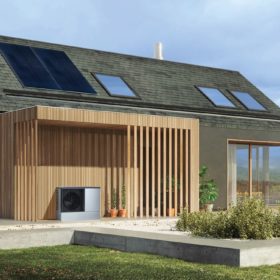
Field data on heat pump efficiency, cold climate performance
Energy Systems Catapult has released interim data from air-source heat pump field monitoring in the United Kingdom between November 2020 and August 2022. Figures show that heat pumps are three times more efficient than gas boilers and that their median coefficient of performance (COP) on cold days is 2.44, compared to 2.80 year round.

India deployed 2.5 GW of large-scale, unsubsidized solar capacity in 2022
India installed 7.7 GW of cumulative, open-access solar capacity by Dec. 31, 2022, following record annual additions of 2.5 GW.
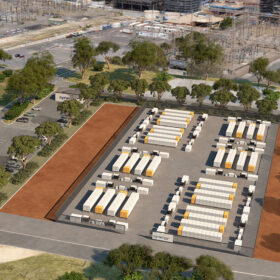
Australian utility unveils plans for 800 MWh big battery
Synergy, a utility owned by the Western Australian government, has revealed plans to build a new 200 MW/800 MWh battery energy storage system in the city of Kwinana, in order to support the state’s main grid and enable the uptake of more renewables.
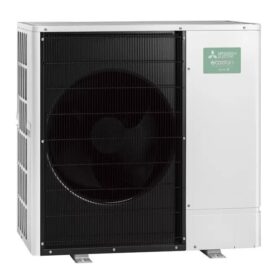
Mitsubishi unveils propane heat pump for residential applications
Mitsubishi Electric has developed an air-source heat pump that uses propane (R290) as the refrigerant. It can produce between 5 kW and 8.5 kW of heat and domestic hot water to a temperature of up to 75 C.

UK cathedral to install solar, storage system
York Minster, one of the largest cathedrals in Northern Europe, has secured approval to install 199 solar modules on its rooftop. The system will generate at least 75,000 kWh per year and will be paired with batteries.
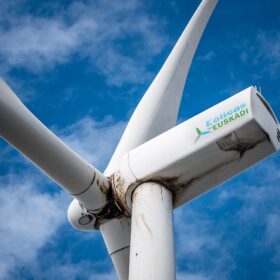
Solar mounting structure made of recycled wind turbine blades
Spain’s Acciona Energia is using fiberglass from the blades of used wind turbines to make the torsion beams of solar trackers. It is using the tech as part of a pilot project in Badajoz, Spain.
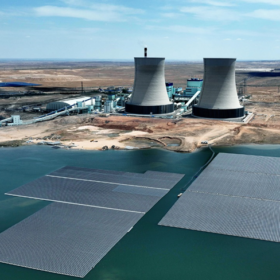
India’s SECI tenders 100 MW floating solar plant
Solar Energy Corp. of India (SECI) has started accepting global bids to build a 100 MW (AC) floating solar project in the Indian state of Jharkhand. Bidding closes on May 2.
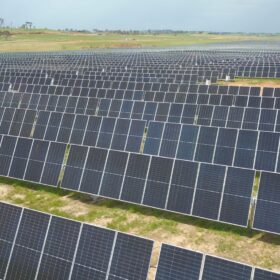
ACEN moves forward with 720 MW Australian solar farm
The largest solar project in the Australian state of New South Wales has officially opened, with ACEN Australia confirming that the first 400 MW stage of its planned 720 MW New England Solar Farm is now progressing through the commissioning process.

European Commission proposes electricity market reform
The European Commission’s long-awaited reform of the European Union’s electricity market proposes to keep the merit order mechanism, but going forward the European energy market will be more strongly characterized by long-term PPAs and bilateral contracts for differences.

French region announces financial aid for solar PPAs
France’s largest administrative region, Nouvelle-Aquitaine, has launched a call for new solar projects. It aims to promote access to power purchase agreements (PPA) for companies and encourage the emergence of new installations.
