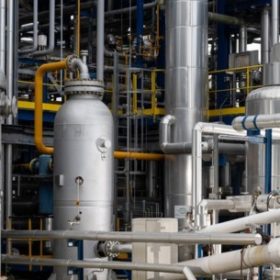
The Hydrogen Stream: work begins on Chile’s first green hydrogen project and French energy giants target decarbonized hydrogen
TotalEnergies wants to decarbonize hydrogen production in Normandy with the support of Air Liquide and, in Chile, an international consortium has begun construction of the country’s first green hydrogen facility. Elsewhere, the Indian government has invited U.S. companies to bid for green hydrogen and electrolyzer contracts.

Agrivoltaics to protect crops from heavy rainfall
BayWa r.e. and the Fraunhofer Institute for Solar Energy Systems ISE have built a 258 kW agrivoltaic system that hosts apple cultivation under four different crop protection systems. The system utilizes agrivoltaic technology with permanent, light-permeable PV modules that block rain, and tracking PV module tech that blocks rain only if necessary.
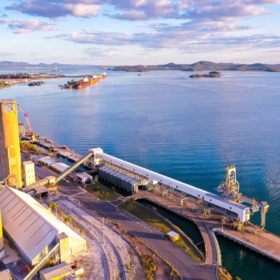
Developers move forward with GW-scale PV-wind-storage project in Australia
A couple of years ago, the Australian state of Queensland became a beacon to advisory Energy Estate and international renewables developer RES Group. The Moah Creek Renewable Energy Project, the first stage of their gigawatt-scale plan, is now about to be introduced to the community.
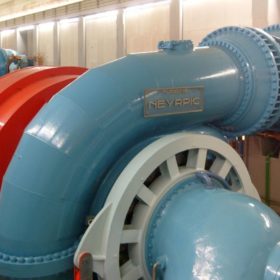
Indonesia moves forward with 1 GW pumped storage hydropower plant
The World Bank has agreed to finance part of a project owned by Indonesian state-owned utility, PLN. The facility is planned to enable a larger penetration of renewable energy to provide with power two large demand centers in West Java.
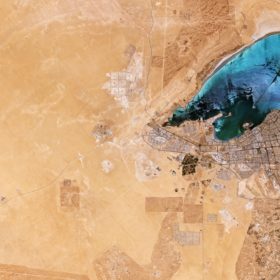
Proposals received for latest version of delayed Kuwaiti gigasolar project
With the Dabdaba/Al-Dibdibah solar field now having been combined with the Shagaya clean energy development, bids for the former’s EPC contract were reportedly received last week. It is unclear whether the facility will have a generation capacity of 1 GW, 1.5 GW or ‘up to 3 GW.’

Solar in uncommon spaces
With land-use concerns on the rise, large-scale solar projects are increasingly being built on everything from landfill sites to water reservoirs. Here’s an overview of the state of the art.
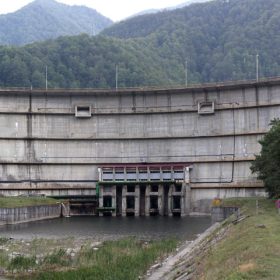
Romanian hydropower producer enters PV business with 45 MW ground-mounted project
The project will be built in Brăila county, southern Romania, at a cost of approximately $42.6 million. Hidroelectrica also wants to build several floating solar plants, totaling 5 MW, at some of its hydropower facilities.
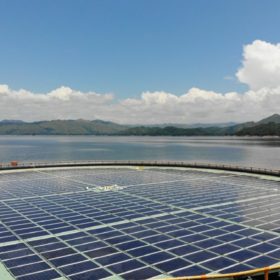
The world’s first large scale hybrid hydro-floating solar power plant
A Norwegian consortium led by Scatec is planning to build a hybrid hydropower-floating PV plant at an unspecified location in West Africa. Building both facilities simultaneously will help its developers define a series of parameters for proper sizing, optimization and design, and set a benchmark for future projects of this kind.

Impact of increasing PV module prices on Indian market
Modules account for a huge percentage of a project’s total costs, and given that independent power providers have lower margins in the Indian solar energy sector, even a small increase in module pricing can put them under more strain.
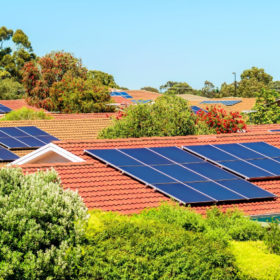
South Australian electricity network’s rooftop PV trial set for launch
Since July 2020, SA Power Networks has been refining technology and stakeholder engagement mechanisms to enable dynamic solar exports to the grid, potentially ending an era of severe export limits on new customers in rooftop-solar-rich parts of the South Australian network and other jurisdictions.
