Tiering markets, evaluating offtakers’ risk: Strategic value in Europe’s C&I solar segment
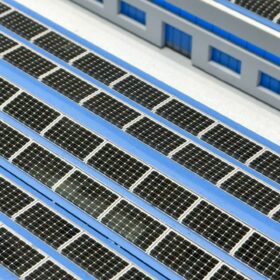
EUPD Research projects that between 2025 and 2029, the European C&I solar segment will expand from 33 GW of annual installations in 2025 to over 40 GW in 2029, leading to an aggregated new C&I installation of 185 GW in the next five years. By the end of 2029 alone, this surge in capacity is expected to prevent approximately 88 million tons of CO₂ emissions equivalent to saving around 204 million barrels of oil in a single year.
Denoising outdoor electroluminescence images of PV panels through deep learning
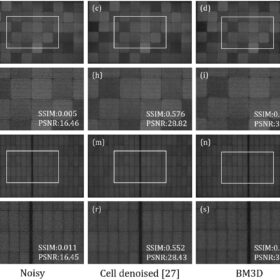
Researchers in Australia have developed a simplified residual network-based architecture method to filter out noise from electroluminescence images of PV modules. The proposed technique reportedly enhance the accuracy and efficiency of automated inspection systems for utility-scale PV plants.
Water-based photovoltaics reach global capacity of 21.18 GW
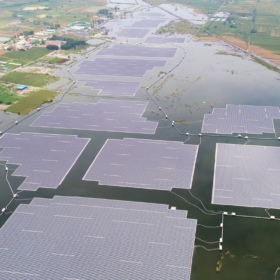
An international research team has developed an index-based remote sensing method to see trends in the global development of water-based PV. It has found that China currently accounts for 80% of the global total deployed capacity.
Cost optimization and competitiveness in green hydrogen: Critical factors and determining variables
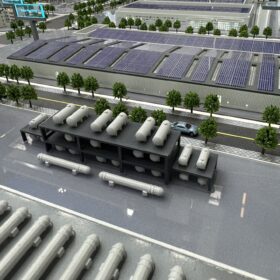
Through a rigorous approach, with more than 4,000 simulations and a detailed analysis of each scenario, Enertis Applus+ offers a roadmap for understanding where, how, and under what conditions green hydrogen can be produced at competitive costs.
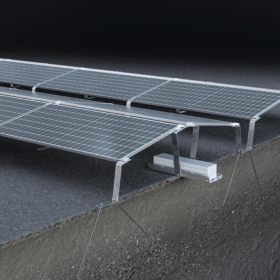
Aerocompact debuts ground-mounted PV solution for small-scale solar
Aerocompact has launched COMPACTGROUND GS 10 PLUS, a ground-mounted PV solution designed for small projects and diverse terrain like farmland and asphalt.
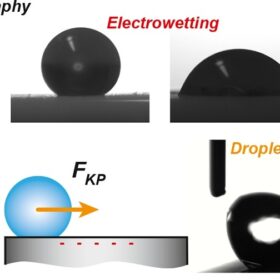
Novel photovoltaic technique to charge patterns for droplet manipulation
Scientists have used photovoltaic charge lithography to imprint surface charges on passive dielectric substrates by shining a halogen lamp onto iron-doped lithium niobate. The technique may support next-generation microfluidic, biomedical, and chemical applications.

Rooftop PV may ‘unintentionally’ exacerbate urban heat
New research from Hong Kong confirms that rooftop PV systems significantly contribute raise daytime temperatures in urban environments. The scientists explained that, although their findings highlight important urban resilience considerations, they should not detract from the broader benefits of PV systems for energy sustainability and carbon reduction.
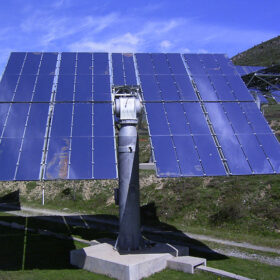
CSP-driven multigeneration system combines hydrogen generation with compressed air, pumped hydro storage
Researchers have designed a novel multigeneration energy system that provides five outputs, namely electricity, hydrogen, cooling, heating, and hot water. The system is mainly powered by a solar heliostat system and incorporates compressed air and pumped hydro storage technologies for storing surplus power.

Liquid insulation for sustainable transformers
Liquid insulation is one of the ways of ensuring transformers – which convert electric power from high voltages to lower voltages – remain safe. Mineral oil, however, has been the main insulating liquid in industrial power systems to date and sustanaible alternatives are strongly needed.
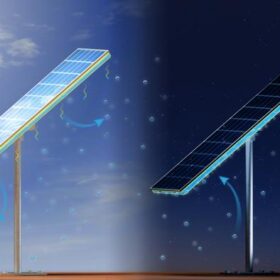
New cooling gel could raise PV module efficiency by 12%
Researchers in Saudi Arabia have developed a hydrogel composite that absorbs moisture in solar modules overnight and facilitates evaporative cooling throughout daylight hours. The system has undergone lab tests and outdoor experiments on two continents.
