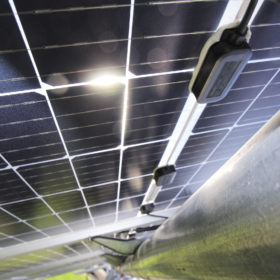
Global solar tracker shipments reach 111 GW in 2024
The United States continues to dominate the solar tracker market, with Nextracker securing the top spot globally in 2024.

EV charging shapes PV investment, grid load in community study
Researchers in Spain have simulated an energy community with varying electric-vehicle penetration levels (0%, 50%, and 100%) to analyze system optimization under different regulatory frameworks and EV brands. Charging strategies significantly affected overall performance and outcomes.

Green hydrogen remains ‘prohibitively’ expensive in Africa
A European research team has assessed the levelized cost of hydrogen across 31 African countries and has concluded that importing green hydrogen from Africa to European is economically unfeasible by 2030, with prices ranging from $10.2/kg to $3.8/kg.

China’s SNEC 2025 show highlights PV industry resilience, storage growth
Chinese solar manufacturers showed resilience at the 2025 SNEC PV Power Expo in Shanghai despite a deepening supply glut, as strong demand for energy storage and emerging technologies offset a steep drop in new PV module launches. Tunnel oxide passivated contact (TOPCon) stayed dominant, while back-contact, perovskite, and lithium iron phosphate (LFP) storage solutions gained traction.

Optimizing endless PV-driven heat pump scenarios for costs, self-sufficiency
Researchers have used mixed-integer linear programming-based multi-objective optimization to optimize 30,912 unique scenarios showing heat pumps operating in combination with PV power. The optimization modeling was conducted under day-ahead spot market prices terms.
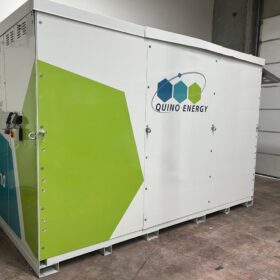
How organic flow batteries could erase the need for critical-mineral dependency
Vanadium flow and lithium-ion batteries both require materials described as critical by the US Department of Energy (DOE).
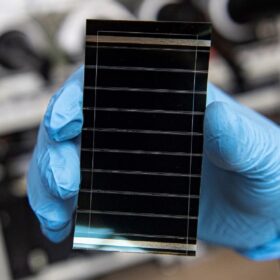
Perovskite solar cell based on chalcogen-molecules achieves 25.37% efficiency
An international research team has used Lewis molecules to improve efficiency and stability of a perovskite solar cell built with a fully encapsulated trapping tactic aimed to reduce perovskite surface defects. The cell achieved a certified power conversion efficiency of 25.18% and a champion efficiency of 25.37%.
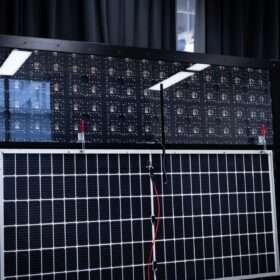
Avalon ST acquires PASAN to expand solar testing operations
Avalon ST, a Swiss LED-based solar simulation and metrology company, has acquired xenon-based solar simulator firm PASAN for an undisclosed sum. The companies will integrate operations and staff in Switzerland China, aiming to expand global reach and product innovation.

Simultaneous optimization of plant design and control unlocks cost-competitive green hydrogen
Achieving cost-competitiveness for green hydrogen produced via water electrolysis using intermittent renewable energy sources remains a significant challenge. Researchers from LUT University in Finland have shown that considerable cost reductions can be achieved by simultaneously optimizing plant control and design, based on specific hydrogen demand targets and local weather conditions.
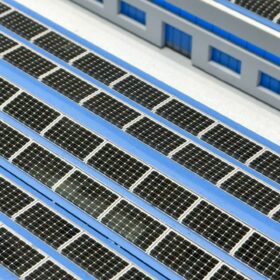
Tiering markets, evaluating offtakers’ risk: Strategic value in Europe’s C&I solar segment
EUPD Research projects that between 2025 and 2029, the European C&I solar segment will expand from 33 GW of annual installations in 2025 to over 40 GW in 2029, leading to an aggregated new C&I installation of 185 GW in the next five years. By the end of 2029 alone, this surge in capacity is expected to prevent approximately 88 million tons of CO₂ emissions equivalent to saving around 204 million barrels of oil in a single year.
