
The case for flywheel storage in the Philippines
An international research team is assessing the potential of flywheels for renewables storage in the Philippines. They considered the use of a flywheel energy storage system developed by US-based Amber Kinetics.

Swiss startup makes first attempt to deploy solar on railways
Swiss startup Sun-Ways has developed a patented solution under which it directly rolls out solar modules between railway tracks like a carpet. The panels can be removed at any time for maintenance work.
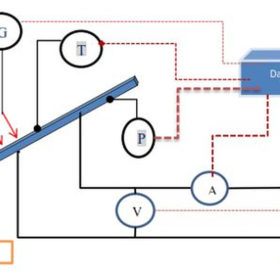
Cooling solar modules with vacuum pressure
Scientists in Indonesia have developed a vacuum technique to lower the temperature of PV modules below the ambient air temperature. They applied it to a solar module in a casing that is resistant to negative pressure.
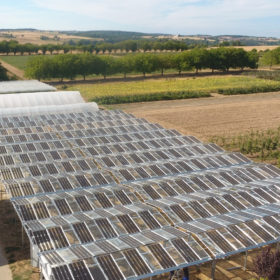
BayWa r.e. continue to deploy agrivoltaic facilities across Europe
German renewables developer BayWa r.e. has finished building four new pilot agrivoltaic projects in the Netherlands, Austria, and Germany. They combine solar with fruit cultivation.

Video: Energy Vault CEO discusses LCOS, novel gravity-based storage design
Robert Piconi, CEO of gravity storage specialist Energy Vault, makes the case for the US company’s long-duration energy storage solutions as an alternative to lithium-ion batteries, and discusses the ideal project size from an economic perspective.
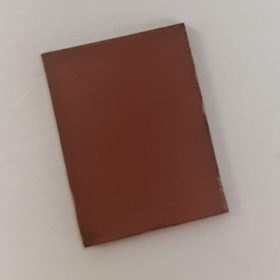
First attempt to build solar cells based on gold polyhalide hybrid perovskite
Scientists in Sweden have proposed the use of gold polyiodide compounds in monolithic perovskite solar cells. They built a lead-free device that achieved an efficiency of 0.052%.
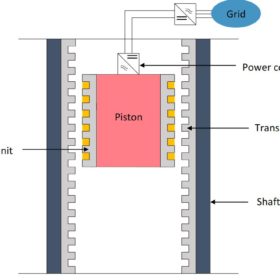
Gravity storage system based on linear electric machines
South African scientists have designed a novel gravity energy storage system that uses linear electric motors to vertically move multiple solid masses to store and discharge electrical energy. They say its levelized cost of storage (LCOS) is $137.20/MWh, but with efficiency improvements, it could drop to about $100/MWh
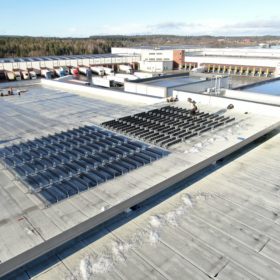
Video: Market outlook for vertical rooftop solar
Norway’s Over Easy Solar AS introduced a new vertical PV system for rooftop applications last year. pv magazine spoke to CEO Trygve Mongstad about system prices and future market prospects for vertical rooftop solar tech.

Perovskite-silicon tandem PV cell with textured wafers hits 28.1% efficiency
Researchers in Saudi Arabia have built a perovskite-silicon tandem cell with textured silicon wafers to offer superior light trapping. The device has an open-circuit voltage of 1,851 mV, a short-circuit current of 18.9 mA/cm2, and a fill factor of 80.1%.
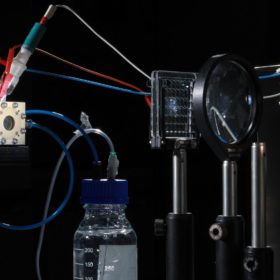
Solar-powered artificial leaf to produce hydrogen from air
Chemical engineers in Switzerland have invented a solar-powered artificial leaf. Their solar-powered, transparent and porous electrode turns water from its gaseous state in the air into hydrogen fuel.
