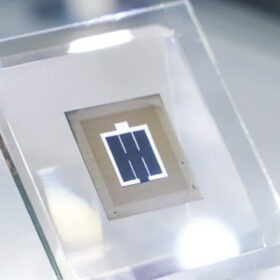
JinkoSolar achieves 32.76% efficiency in perovskite-TOPCon tandem solar cell
The result was certified by China’s National Photovoltaic Industry Metrology Test Center (NPVM). The cell utilizes a perovskite top device with MBT-ligand-controlled crystallization on a TOPCon silicon bottom cell, achieving a void-free, high-efficiency tandem structure.

Smart meters are vulnerable gateways to cyberattacks
Researchers found that widely deployed smart meters pose a “massive” cybersecurity risk, potentially enabling data manipulation, energy theft, and service disruption. They propose a new detection method using state estimation and statistical boundaries to more accurately identify cyberattacks, outperforming traditional techniques despite higher computational demands.
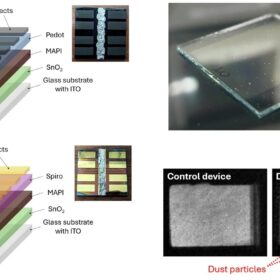
Perovskite solar cells can be made without expensive cleanrooms
Swansea University researchers found that perovskite solar cells can tolerate dusty fabrication environments, performing almost as well as those made in cleanrooms. The findings suggest low-cost, scalable production may be possible without ultra-sterile conditions, potentially accelerating cell and module manufacturing.
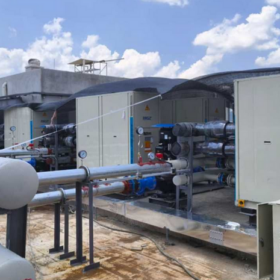
PVT-driven tower heat pump for building retrofits
Researchers in China demonstrated that integrating energy tower heat pumps with evaporator-side boilers, air-source heat pumps, or solar-assisted systems can significantly improve winter heating efficiency and economic performance in commercial buildings. Among the four configurations tested, the evaporator-side boiler and solar-assisted systems delivered the highest performance and energy savings, offering a sustainable, low-carbon alternative to conventional heating.

Solar cyber threats expand, but inverters still stay in the crosshairs
In an interview with pv magazine, Jay Johnson, the CTO of US-based cybersecurity firm DERSec, explains that PV systems face cybersecurity risks that extend far beyond inverters, as demonstrated by a December attack on Polish solar plants where wiper malware targeted substation equipment rather than the inverters themselves. Vulnerabilities often lie in backhaul communication channels like APIs and mobile apps, making layered defenses, network segmentation, and vigilant monitoring essential to safeguard distributed energy resources.
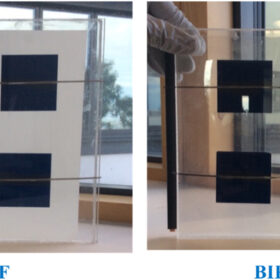
New solar window concept integrates polymer-dispersed liquid crystal to enable switchable transparency
Researchers in the United Kingdom have developed a smart window that combines switchable polymer-dispersed liquid crystal with integrated PV cells, offering controllable transparency and electricity generation. The system balances light, heat, and solar protection while maintaining high visual quality and stable performance, according to its creators.
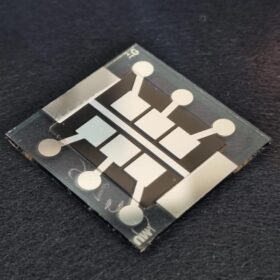
Scientists build high temperature-resistant perovskite solar cell with 26% efficiency
LMU researchers have developed a dual molecular reinforcement strategy for perovskite solar cells that strengthens grain boundaries, improving both durability and performance.
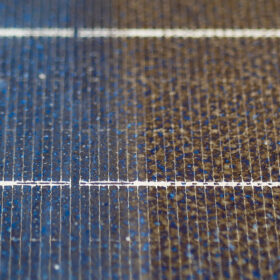
Fraunhofer CSP warns some cleaning agents may reduce PV module performance by up to 5.6%
Researchers at the German institute found that some widely used PV cleaning agents can damage anti reflective glass coatings, significantly reducing solar module efficiency. Their tests showed that while some cleaners are safe, others cause visible and permanent coating degradation, highlighting the need for careful selection of cleaning products to avoid long term performance loss.

Sandia Labs benchmarks PV software providers in first ever blind comparison analysis
Sandia National Laboratories conducted the first-ever blind comparison of seven commercial PV modeling software, revealing that differences in weather handling, system modeling, derates, and assumptions grow as system complexity increases. The study emphasizes that software choice should consider project complexity, workflow, and modeling features rather than relying on rankings alone.
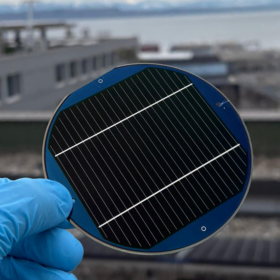
EPFL, CSEM achieve world record efficiency of 30.02% in perovskite-silicon triple-junction solar cell
An international research team boosted triple-junction solar cell performance by enhancing perovskite crystal growth, increasing middle-cell light absorption, and adding reflective nanoparticles.
