
New PV system sizing approach based on jellyfish search algorithm
Researchers have used the jellyfish search algorithm to optimize solar PV distributed generation placement and sizing. They have tested the algorithm on an IEEE 33-bus system, with one, two, or three PV deployment scenarios, and compared its performance with that of a dozen of competing optimization techniques.

First Solar to use quantum dots to boost module efficiency
Quantum dot technology promises to boost bifacial solar module output. The company entered into a supply agreement with specialist UbiQD.

Longi unveils 34.58%-efficient tandem perovskite-silicon solar cell based on asymmetric self-assembled monolayer
In a new scientific paper published in nature, the Chinese manufacturer presented a new tandem perovskite-silicon solar cell based on a bottom cell with a heterojunction design. It also used a new type of self-assembled monolayer that reportedly reduces non-radiative recombination and increases cell efficiency.

What standards for agrivoltaics?
The technology which combines solar PV panels and agriculture is gaining ground. IEC Standards for solar photovoltaic (PV) systems already exist, but more might be required, dealing with some of the more specific issues relating to agriculture.
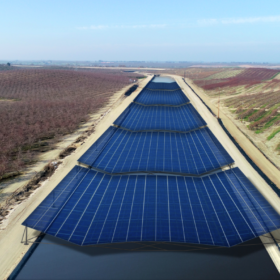
The best tilt angle for canal-mounted PV systems
Researchers in Türkiye have conducted an experimental study on the ideal tilt angles for PV systems deployed on canals. Their analysis showed that an 8◦ tilt angle consistently demonstrates greater performance.

Researchers identify optimal level of solar, battery storage for European energy market
Researchers in Hungary have developed a model to calculate the optimal PV and battery storage balance to support the European grid in the next few years. They found that the cost-optimal range is at 530–880 GW of PV, combined with battery storage equivalent to 2.5–7.5% of the total intermittent capacity.
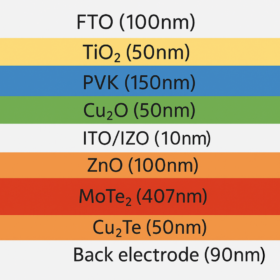
First attempt to build tandem solar cells based on perovskite, transition metal dichalcogenide
Scientists in India have proposed to design new tandem solar cells using transition metal dichalcogenide as an absorber material for the bottom PV device. Their simulations showed these tandem cells may reach an efficiency of over 35%.
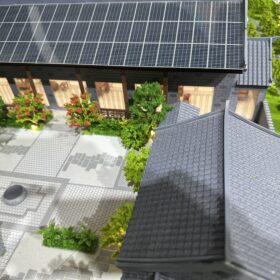
Eastern European prosumers acting in ‘energy self-defense’
New research on the PV markets of the four countries forming the so-called Visegrad Group has confirmed that solar prosumers are driven primarily by economic interests rather than environmental concerns. The scientists coined the concept of “energy self-defense” to define all those behaviors that push homeowners to resort to PV in attempt to address price shocks.
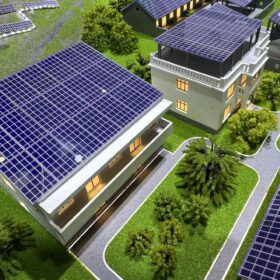
Novel sizing approach for PV, battery storage in smart homes
Scientists in Iran have developed a novel framework to optimize the capacity of PV and battery storage in smart homes, using a two-stage stochastic programming model. They considered the uncertainties in the grid, market price, and PV output, while also looking at different operation cases.
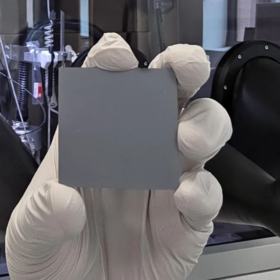
UK researchers developing new type of cadmium telluride PV panels for space applications
A team of UK researchers is working on lightweight cadmium telluride (CdTe) solar devices for space arrays. The aim is to develop 20%-efficient ultra-thin devices to provide lightweight, compact, lower cost solar power for satellites and space-based manufacturing applications.
