imec, Panasonic develop highly conductive solid nanocomposite electrolyte
The Belgian research institute and the Japanese electronics group say they have developed a solid nanocomposite electrolyte with a lithium ion conductivity several times greater than in its liquid equivalent.
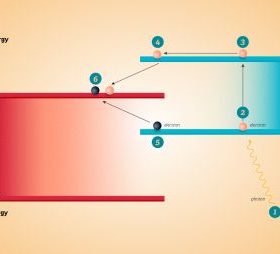
Technology with electron multiplication potential comes out of Lab at University of California
A new photodetector, a device that senses light, has been developed by Physicists at the University of California. The device functions by combining two distinct inorganic materials and producing quantum mechanical processes that could revolutionize the way solar energy is collected.

Italian researchers use graphene oxide to increase efficiency of perovskite cells
Scientists of the University of Florence claim that graphene-based electron transport layers (ETL) achieve higher carrier injection with respect to most commonly used ETLs.
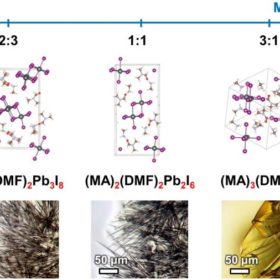
Russian scientists study potential of crystalline solvates for increasing efficiency of perovskite cells
Scientists at Moscow, Moscow State University (MSU) have explained how altering the ratio of components forming light absorbing layers of a perovskite solar cell influences the structure of created films and battery efficiency.
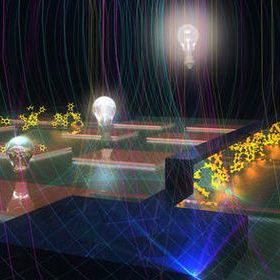
Spanish scientists use magnetic electrodes to increase efficiency of fullerene-based solar cell
A spanish research team from Ikerbasque has created a fullerene-based cell that is also capable of turning direct current into alternating current.

Black silicon could exploit potential of multicrystalline technology
In recent times there has been a shift from multi to monocrystalline solar cells and modules. One reason for this is the difficulty of using diamond wire saws on multi wafers in production. Black silicon has the potential to change this and to increase the efficiency of multi, Bill Rever, Co-founder and Chief Marketing and Sales Officer at Advanced Silicon Group, said at EU PVSEC.
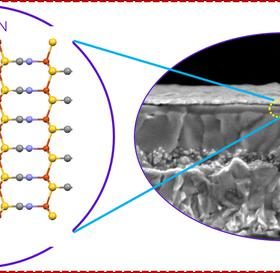
Swiss researchers improve stability of perovskite solar cells
EPFL scientists have marginally improved the operational stability of perovskite cells with the introduction of cuprous thiocyanate protected by a thin layer of reduced graphene oxide.
Cambridge scientists say perovskite-based PV cells can achieve maximum 30% efficiency
Researchers from the University of Cambridge and Italy’s Politecnico di Milano have set a time limit for ultrafast perovskite solar cells and have quantified the speeds at which future solar cells would have to operate in order to increase efficiency.
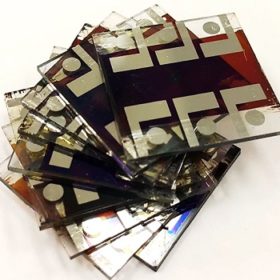
New combination of elements a positive step forwards for KAUST solar centre and Solar panels
Perovskite research sees an unexpected improvement, as a result of research from Saudi Arabia’s KAUST (King Abdullah University of Science and Technology) solar centre, improving the quality and efficiency of the potential of solar panels.

Scientists look into insect eyes for new solar cell design
Mimicking a compound eye of a fly, Stanford University scientists have packed tiny perovskite cells into a hexagon-shaped epoxy resin scaffold, improving the material’s durability when exposed to moisture, heat and mechanical stress in a breakthrough that may open the door to the awaited improvement in perovskite’s operational stability.
