
Vertical bifacial agrivoltaics feasible at high latitudes with 8-meter row spacing
New research from Finland shows how spacing between solar modules plays a key role in determing power and crop yield. The scientists found that, at a separation of 8 m, crops received at least 75% of irradiation, which is expected to result in minimal impact compared with an unshaded scenario.
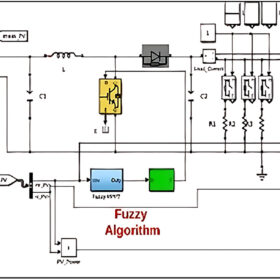
Optimizing PV system tilt angle, MPPT using fuzzy logic controller
Researchers in the Middle East have developed a fuzzy logic controller that simultaneously optimizes the tilt angle of PV systems and performs maximum power point tracking (MPPT). Year-long simulations indicate that the proposed approach increases power generation by approximately 20%.
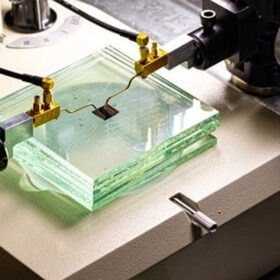
U.S. scientists build graphene-based solar cells than can charge supercapacitors
The solar cells combine multilayer graphene with silicon wafers, harvesting both solar and kinetic energy for continuous operation. Tests show the cells can autonomously power supercapacitors embedded in a temperature sensor.

Outdoor testing identifies factors contributing to perovskite solar cell degradation
Tests conducted by a research team in outdoor environments in Spain and Poland have demonstrated a strong correlation between perovskite solar cell degradation and the combined effects of climatic and operating conditions. The scientists found that open-circuit operation accelerates degradation, whereas operation at the maximum power point and under short-circuit conditions has a lower impact.

Increasing PVT-assisted heat pump efficiency with liquid overfeed design
Researchers in China developed a large-scale PV-thermal heat pump system using a liquid overfeed method that reportedly improves both thermal and electrical efficiency. Field tests showed up to a 4.81% boost in power generation and significantly reduced pressure losses compared to conventional systems.

Bangladesh opens testing lab to certify solar module quality
The Bangladesh Standards and Testing Institution (BSTI) says its new solar module testing laboratory in Dhaka marks a major step toward enforcing quality standards and supporting the nation’s export ambitions.

Detecting PV module defects at a single glance
Scientists in China have developed a new deep learning model based on the so-called “You Only Look Once” algorithm, which requires only one forward propagation pass through the neural network to make predictions,
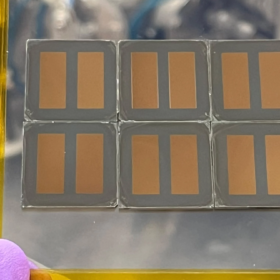
NTU achieves high stability in 25.1%-efficient inverted perovskite solar cell
Researchers at Nanyang Technological University have demonstrated a method to integrate chemically inert low-dimensional interface materials into the fabrication of inverted perovskite solar cells. Their prototype solar cells retained over 93% of the initial power conversion efficiency of 25.1% after 1,000 hours of operation, and 98% after 1,100 hours at 85 C.

All low-cost PV monitoring systems at a glance
A group of scientists in China conducted a comprehensive review of existing low-cost photovoltaic monitoring approaches. They found that only 11 out of 88 studies related to PV monitoring incorporate machine learning. The researchers urge the scientific community to place greater emphasis on lightweight machine learning solutions and smartphone-based integration.

New Python-based tool optimizes PV plant deployment on hilly terrain
Researchers in India have developed a novel layout design tool to identify the optimal locations for solar panel installation on undulating terrain. The tool consists of two components: a filtering module that excludes unsuitable land patches, and an algorithm that determines the optimal distribution of panels across the remaining usable area. The approach was demonstrated on a test site in India.
