
The best tilt angle to improve PV module performance in world’s worst soiling accumulation zone
Scientists have measured the performance of PV modules under strong soiling conditions in Saudi Arabia and have identified the most suitable tilt angles for improving power generation. They have also found that a key role is played by rain intensity, dust, sandstorms, and cloud cover.
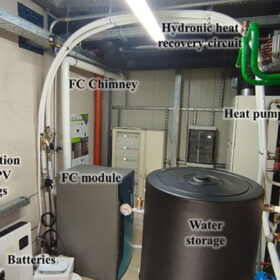
Italian scientists show technical feasibility of solid oxide fuel cells in PV-driven residential buildings
The researchers conducted a case study on a solid oxide fuel cell system deployed in a nearly zero-energy single-floor villa with a size of 80 m2 located in southern Italy. They found that, in particular conditions of photovoltaic production, the system is not only able to meet the home electric loads, but also to inject surplus energy into the network.

Advansor launches CO2 plug-and-play heat pumps
The Danish manufacturer said its novel CO2 heat pumps can reach a water inlet temperature of 40 C and a water outlet temperature of 95 C. The systems have purportedly a combined coefficient of performance of up to 5.56.

Open-source dataset for rooftop PV generation in urban environments
A group of scientists has developed an open-source dataset comprising three years’ worth of data from Hong Kong’s largest behind-the-meter rooftop solar power project. Power generation was collected at 5-minute intervals, and meteorological data at 1-minute.
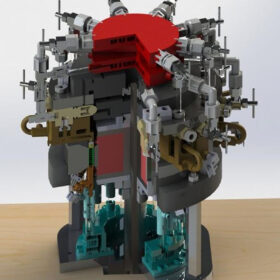
U.S. scientists building magnetocaloric heat pump with high system power density
Developed at the U. S. Ames National Laboratory, the novel magnetocaloric heat pump utilizes gadolinium as the working medium and reportedly matches current vapor-compression heat pumps for weight, cost, and performance. The system is based on a packed-particle bed active magnetic regenerator, a magnetic source composed of permanent magnets and high permeability magnetic steel.

Solis releases three-phase string C&I inverters with fuseless design
The Chinese inverter said its new inverters have an MPPT current of up to 54 A and support more than a 150% DC/AC ratio. The new products also feature a maximum efficiency of 98.8% and a European efficiency rate of 98.3%.

Optimizing photovoltaic systems: Best practices for economic, technical key performance indicators
As the global solar energy industry grows, so does the need for accurate monitoring of performance and financial viability. The latest report by IEA PVPS Task 13, “Best Practice Guidelines for the Use of Economic and Technical KPIs,” provides a comprehensive framework to address this issue. This article explores the importance, methodologies, and applications of Key Performance Indicators (KPIs), with a focus on their role in optimizing PV systems.

South Korea’s new solar installations hit 2.5 GW in 2024
South Korea installed 2.5 GW of new solar capacity in 2024, bringing its cumulative PV capacity to more than 29.5 GW, according to the Korean Energy Agency.
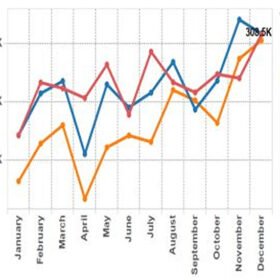
Australia’s rooftop solar market ends 2024 on high
Australia’s rooftop solar market finished 2024 on a high, with about 309 MW of monthly installations delivering one of the best December totals in recent years and putting the national trend back on the up.
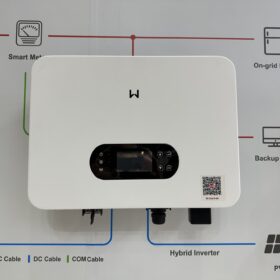
GoodWe unveils hybrid inverters for homes with weak wireless service
GoodWe says its ES Uniq Series hybrid inverters suit on-grid and off-grid applications, offering a maximum efficiency of 97.6% and a European efficiency of 96.2%.
