
Trina Solar achieves 24.5% efficiency for 210 mm p-type PERC solar cell
Trina Solar said the State Key Laboratory of PV Science and Technology in China has confirmed the efficiency rating of its latest solar panel.
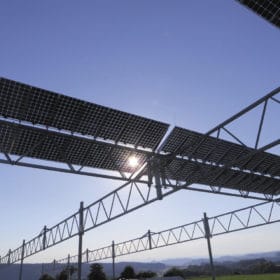
New method to evaluate performance, LCOE of elevated agrivoltaics
Scientists in Belgium have developed a way to assess elevated agrivoltaic projects, by calculating key performance indicators such as energy yield and levelized cost of energy (LCOE). They have found that shade-tolerant crops such as potatoes could potentially be paired with around 1,290 GW of PV capacity in Europe.
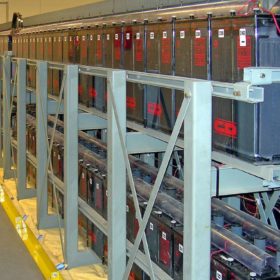
The real value of energy storage
An international research team has developed a new way to evaluate the economic value of energy storage technologies. They went beyond pure cost assumptions to consider the benefits that such technologies could bring to energy systems.
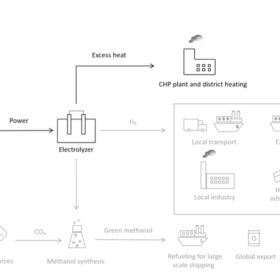
Waste heat from hydrogen production for district heating
The use of waste heat from hydrogen production in district heating could increase the attractiveness of green hydrogen, according to new research from Sweden.
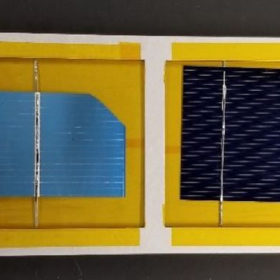
Role of UV in solar cell degradation
US scientists have tested a range of modern cell designs under strong ultraviolet light and have found that many of them, including p-type PERC and n-type heterojunction cells, are more susceptible to degradation than older back surface field designs. They noted that the rear side of bifacial cells may be particularly vulnerable.

The Hydrogen Stream: Global electrolyzer market to reach 8.5 GW by 2026
GlobalData has predicted that the global electrolyzer market will hit 8.52 GW by 2026. BP and Thyssenkrupp have agreed to cooperate on the use of hydrogen in the steel sector, while electrolyzer supplier Nel Hydrogen has secured orders in Australia and Denmark.
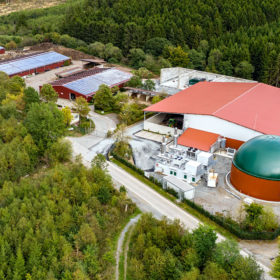
Photovoltaics and anaerobic digestion
Researchers in Egypt have studied the use of solar power and anaerobic digestion for a 6,300-square-meter farm capable of housing 200 head of milk/beef cattle. They found that this combination could achieve a cost of energy of $0.0226/kWh.
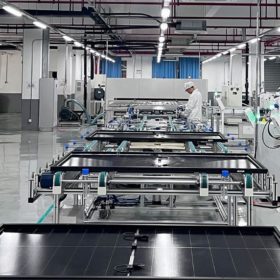
Chinese manufacturer unveils 210 mm busbarless heterojunction solar module
China’s Cando-solar Photoelectric Technology said its newest solar panel has a power output of up to 425 W and a power conversion efficiency of up to 22.1%. Its temperature coefficient is -0.24% per degree Celsius.
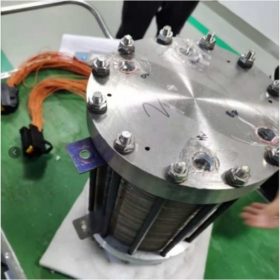
PEM electrolysis coupled with thermal energy storage
Chinese researchers claim to have improved the performance of a proton exchange membrane electrolyzer by connecting it to a thermal energy storage system.
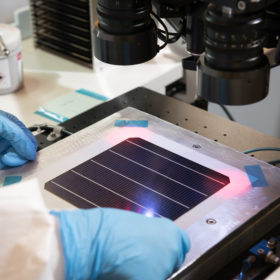
Environmental impacts of perovskite PV
A life-cycle analysis of perovskite-silicon tandem modules indicates that additional environmental impacts in manufacturing are more than offset by the higher energy yield over their lifetime.
