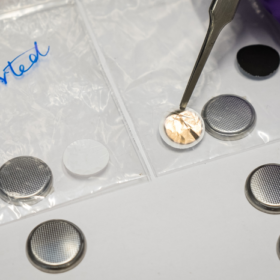
Novel technique to prevent fires in lithium-ion batteries
Singaporean scientists have developed a special device that prevents the formation of dendrites in lithium-ion storage. The additional layer they created works as an interface on behalf of the negative electrode, to exchange lithium-ions with the positive electrode.

Agrivoltaics for strip farming
Vattenfall is leading a Dutch consortium in a research project to assess whether agrivoltaics is also compatible with strip cropping. The company’s head of Solar Development NL, Annemarie Schouten, spoke with pv magazine about the first 0.7 MW pilot project under development in the northern Dutch province of Flevoland.
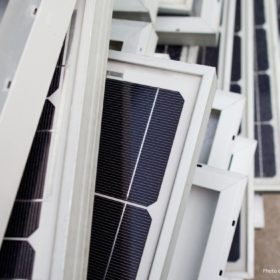
Recycling solar panels: Making the numbers work
NREL researchers said a profitable and sustainable solar panel recycling industry could establish itself by 2032. Here’s how the numbers work.
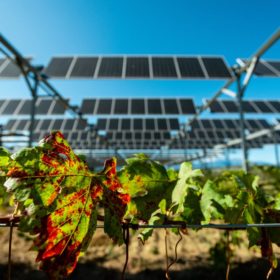
Agrivoltaics for viticulture
French specialist Sun’Agri installed a pilot facility on five hectares in southern France in 2018. Its goal is to protect the vines from weather hazards and to improve the quality of the wine by lowering its alcohol content. The first harvest took place in mid-September.
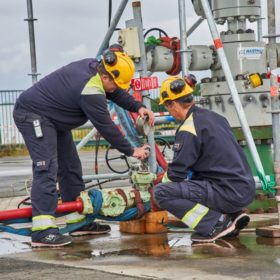
Dutch gas giant begins storing hydrogen in underground salt cavern
Operated by Gasunie, the underground storage facility is located near Veendam in the province of Groningen and should be fully operational in 2026. Tests will be run until spring 2022.
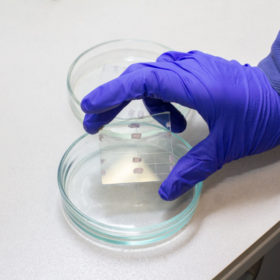
Russian scientists achieve 21.1% efficiency in perovskite solar cell via Mie-resonant silicon nanoparticles
A Russian-Italian research group has developed resonant silicon nanoparticles that are claimed to improve the performance of perovskite solar cells. These particles serve as nanoantennae – they catch light and it resonates inside them, which amplifies the cell’s light absorption.
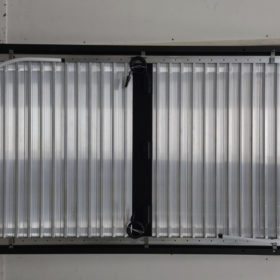
Hybrid PV-thermal modules providing heat source to brine-water heat pumps
Developed by Dutch company UseAllEnergy, the module is fabricated with a heat exchanger placed on the rear side that works as a heat source for a brine-water heat pump. Thanks to this innovation, the heat pump does not need to get heat from a borehole yet can still generate sufficient thermal energy. The solution is claimed to be easy to install and also to be suitable for retrofits.
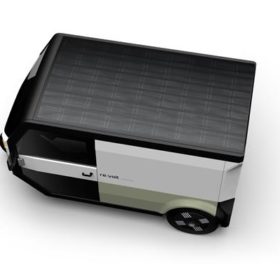
Solar-powered delivery van with 400 km range
Swedish start-up Clean Motion is seeking to commercialize an electric delivery van that is also powered by IBC solar modules placed on its roof. The vehicle is claimed to have a 400 km range, of which up to 130 km are provided by the PV array.
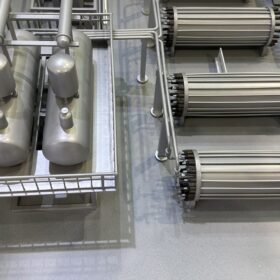
Australian scientists seek to verify tech claimed to improve hydrogen fuel cell efficiency by 60%
From pv magazine Australia Queensland’s University of Technology (QUT) is working on verifying Titan Hydrogen’s claims its patent-pending technology will “effectively double” vehicles’ driving ranges by enabling a fuel cell to produce more electricity from the same amount of hydrogen. The Australian-based company claims its technology could increase the capacity of fuel cells by up […]
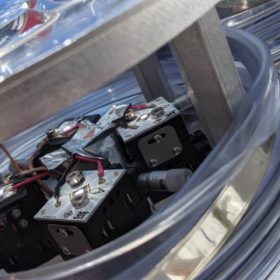
CPV module with improved short-circuit current via microstructured encapsulant coatings
A Canadian consortium led by the Sherbrooke University has developed a CPV panel with improved light absorption through a microstructured anti-reflecting coating consisting of a monolayer of silica beads, which they claim can improve the device’s short-circuit current by up to 3.7%. The module is based on III-V solar cells.
