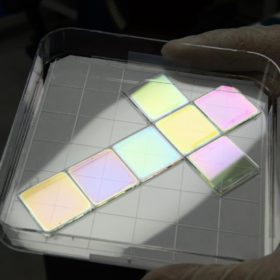
Cadmium-free CIGS solar cell with 18% efficiency
South Korean scientists manufactured the cell with the chemical bath deposition method, using different thiourea concentrations. For the buffer layer, they used zinc instead of cadmium sulfide. The cell is flexible and is available in seven different colors.
Fuzzy logic MPPT to improve PV system performance
A Pakistani-Chinese research group has demonstrated a new maximum power point tracking method, based on a fuzzy logic algorithm to provide faster results. The converter tech is claimed to have an impact on PV system efficiency and provide isolation between the load and the PV array.
Temperature-based MPPT algorithm to improve PV system efficiency
Researchers in Spain have developed a maximum power point tracking (MPPT) algorithm based on just one input parameter – PV module temperature. The algorithm has already shown stability in testing, the scientists claim.

How much vertical BIPV is too much?
A French-Italian research group has shown that BIPV facades on buildings can cause a ‘darkening’ effect by reducing light reflectance on nearby installations, dragging down energy production by 11%. The ‘urban heat island effect’ can also weigh on PV system performance, the researchers said.

Cleaning the air is like ‘moving a solar panel from Toronto to Houston’
An international research team has measured the reduction of air pollution due to the Covid-19 shutdown and its impact on solar radiation levels. They found that solar radiation in Delhi, one of the world’s most polluted cities, was around 8.3% higher in late March, when the Indian government implemented lockdown measures.

Pushing the boundaries of PV cell sensitivity
Scientists in Australia and the United States have managed to ‘upconvert’ light from below the silicon bandgap into high-energy light that can be captured by silicon solar cells.
Tandem solar modules vs commercial crystalline
Researchers in France have tried to predict the competitiveness of tandem PV modules against commercial crystalline products in 2030. Crystalline products will be 22-24% efficient in a decade, according to the researchers, possibly 25% if interdigitated back-contact heterojunction versions become mainstream. To compete, tandem devices will need to offer similar life spans and degradation rates, plus efficiencies of 30%.

New all-iron redox flow battery for renewables storage
Scientists in the U.S. claim to have demonstrated an inexpensive, long-life, safe and eco-friendly redox flow battery. The device is said offer coulombic efficiency of 97.9% thanks to functional electrolyte additives, pH and elevated temperature.

PV module recycling should prioritize high-purity silicon recovery
Recovering silicon of the quality required for reuse in panels is at the heart of mitigating device carbon footprints. R&D efforts should be ramped up now, says an international research group, so the technology is in place when huge volumes of modules begin to need replacing.
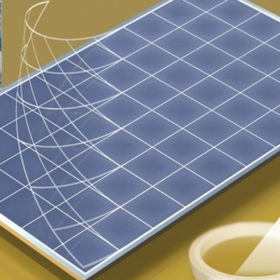
Solar film with integrated optics to increase performance of PV panels
Finnish company ICS has developed a foil which it claims can significantly increase the yield of solar panels, when applied to the edges of a PV module. Germany’s Fraunhofer ISE has confirmed that the increase in performance for conventional solar modules with the solar film is ranging from 5% to 10%.
