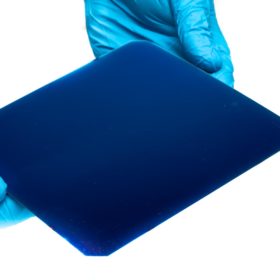
IBC solar modules may drive TOPCon out of market by 2028, says tech expert
Radovan Kopecek, an expert on interdigitated back-contacted (IBC) tech, says that IBC solar panels could capture more than 50% of the global market by 2030, potentially pushing TOPCon products out of competition. He told pv magazine how this transition might materialize and discussed the tech advancements that could make it possible.
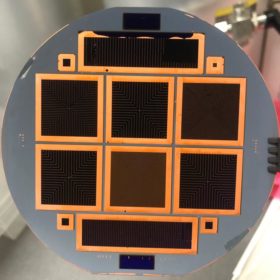
Silicon heterojunction solar cell with 23.83% efficiency via molybdenum oxide hole collector
Dutch scientists have achieved a record-breaking efficiency for a silicon heterojunction solar cell fabricated with a hole collector based on a molybdenum oxide (MoOx). They used plasma treatments to increase the presence of oxygen in the MoOx layer, to improve its electronic properties.

Spain, Portugal to lead renewables in Europe, says Rystad
Norwegian consulting firm Rystad Energy has described the Iberian Peninsula as “a new European energy powerhouse.” It expects Spain and Portugal to reach 79% renewables in their combined electricity mix by 2030.
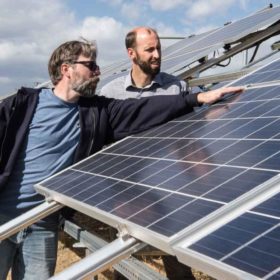
PV modules with longer lifetimes could slash demand for materials, says NREL
The US National Renewable Energy Laboratory (NREL) says in a new report that PV module lifetime extensions should be prioritized over closed-loop recycling to reduce demand for new materials.
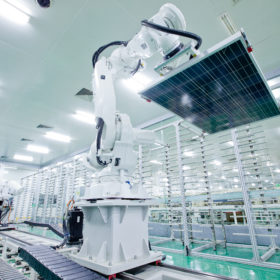
Jinko Solar reports higher sales, profit in Q3
Jinko Solar recorded a higher profit in the third quarter of 2022, as sales of its solar panels surpassed 10 GW. The Chinese PV module manufacturer said it now wants to ramp up production to keep pace with rising global demand.
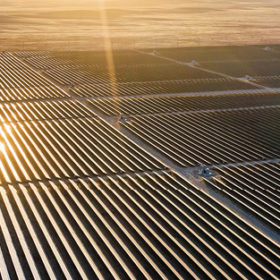
Annual added PV capacity will more than quadruple to 650 GW in 2030, says IEA
The International Energy Agency (IEA) has published its “World Energy Outlook 2022” report. It expects the energy crisis triggered by Russia’s invasion of Ukraine to accelerate the global energy transition.
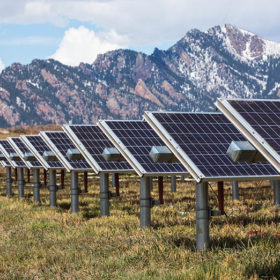
Cooling down solar modules by increasing space between panel rows
A US research team claims to have demonstrated that increasing the spacing of solar panels between rows improves PV system efficiency and economics by allowing airflow to cool down the modules. The method could improve a project’s LCOE by as much as 2.15% in certain climates.
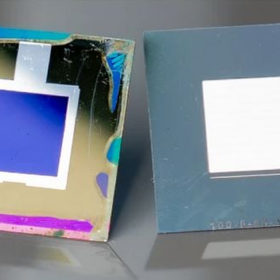
Tandem perovskite-silicon solar cell with 29.80% efficiency via periodic nanotextures
Researchers from Germany have designed a tandem perovskite silicon PV cell that reportedly has lower reflection losses and improved open-circuit voltage. They demonstrated a device with submicrometre-periodic nanotextures and an improved back-reflector design.
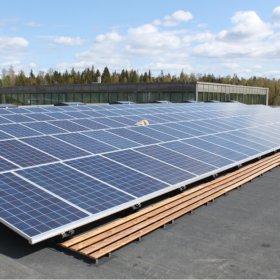
Finland to extend net metering to all PV systems in 2023
At present, only a few distributors offer net-metering services in Finland, meaning that only a small share of PV systems are net-metered. In 2023, all PV systems will be offered net metering through the country’s new centralized information exchange system for the retail electricity market.

Algae could boost solar panel efficiency by 4%
A Swedish team has inaugurated a pilot facility to mass produce algae material that can potentially boost silicon solar module efficiency by 4% and thin film by 36%. The algae are added to the encapsulant in silicon-based modules or to the anti-reflective coating on the glass of thin film modules. The team estimates the resulting modules would be 3.9% cheaper.
