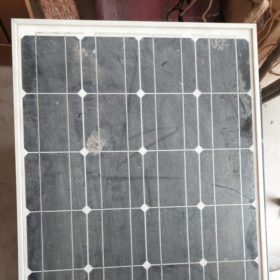
Roadmap for solar module recycling in Bangladesh
Bangladesh currently does not have a recycling center for PV module recycling. But according to a group of local scientists, the country could evolve into a regional hub for PV waste recycling if proper guidelines are implemented.
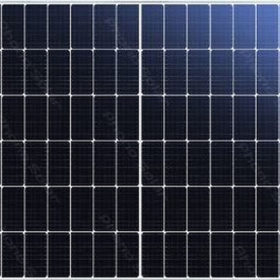
Phono Solar introduces 560W TOPCon solar module with 21.72% efficiency
The panel is part of the company’s new TOPCon module series, which also includes a 430W product with an efficiency of 21.99%.

Chinese PV Industry Brief: Daqo could make 125,000 tons of poly this year
Also, heterojunction module manufacturer Huasun has begun assembling production lines at its new 2GW factory and Trina Solar has agreed to buy 290 million wafers from Beijing Jingyuntong Technology.

Solar-powered self compacting garbage can
The city government of Florence, in Italy, is installing solar-powered, self-compacting garbage cans that are claimed to reduce emptying operations by 94% compared to traditional bins. The devices were provided by Korean manufacturer Ecube Labs.
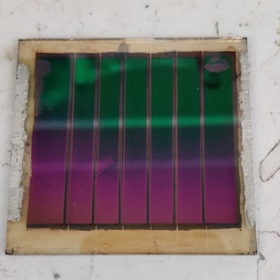
Semi-transparent perovskite solar cell with 13% efficiency, 27% transparency
Developed for applications in BIPV, vehicle-integrated solar and smart glasses, the solar cell was built with an ultra-thin, semi-transparent, triple-cation perovskite film and gold nanorods (Au NRs). The device achieved an open-circuit voltage of 1097.1mV, a short-circuit current of 17.11mA/cm2 and a fill factor of 73.12%.

Akuo speaks out on recent fire accident at its 17MW floating PV plant in France
Nearly a month after the fire occurred at the O’Mega 1 floating power plant in Piolenc, Akuo has drawn the first conclusions from the incident. pv magazine was able to visit the site to observe the damage, gather lessons, and see the arrangements put in place by the site managers.
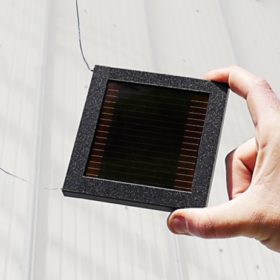
Mini perovskite solar module with 40 sq cm aperture area, 17% efficiency
The 19.2%-efficient perovskite cells used in the module rely on an electron layer based on tin oxide that was deposited via chemical bath deposition. This technique, according to the device’s creators, has made it possible to have a relatively small drop in efficiency from small cells to the 40cm2 module.
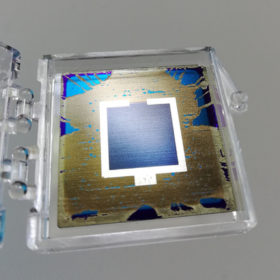
First attempt to build tandem perovskite-PERC/POLO solar cells achieves 21.3% efficiency
The tandem cell was fabricated by German scientists through a process flow that is compatible with industrial, mainstream PERC technologies. According to its creators, the device has the potential to exceed efficiencies of over 29% with adjustments in the perovskite thickness and bandgap.

Sustainable, vertically integrated solar manufacturing in India
A new report by JMK Research and IEEFA says that Indian solar manufacturers need to create a strong foundation for sustainable development by integrating raw materials into their R&D plans, rather than focusing solely on output.

Bifacial TOPCon solar cell with 23.84% efficiency, 90% lower silver consumption
Developed by Germany’s Fraunhofer ISE, the cell is manufactured with metallization based on a plating process. The device was built with galvanic nickel/copper/silver contacts instead of common silver contacts.
