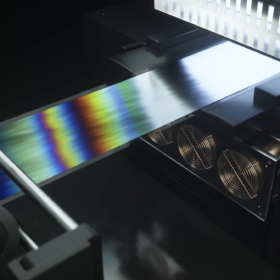
New flexible solar module factory begins operations in the UK
Operated by UK start-up Power Roll, the pilot factory will reach a capacity of 30 MW by year end. The manufacturer uses low-cost roll-to-roll manufacturing processes and patented microgroove patterns to produce flexible solar panels intended for applications on warehouses and agricultural sheds whose roofs are not strong enough for conventional arrays as well as in vehicle-integrated photovoltaics.

The best BIPV envelope design alternatives
Scientists in Australia have developed an optimization framework for building-integrated photovoltaics that allows the selection of design variables according to user preferences. Their model considers PV-related features such as tilt angle, window-to-wall ratio (WWR), PV placement, and PV product type, as well as objective functions and constraints such as the net present value and the payback period.
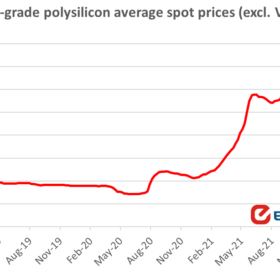
Polysilicon price fluctuations expected to continue until late 2023
Two industry experts have provided analyses of the current polysilicon price scenario in a chat with pv magazine and both agreed that polysilicon demand is still growing faster than supply. The price may decrease starting from the second quarter and reach more reasonable levels by the end of the year.
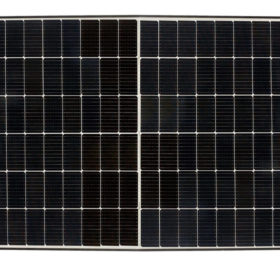
Tindo Solar launches 545W solar panel for utility-scale applications
Australia’s only solar panel manufacturer, has launched its first module designed specifically for utility-scale projects, the 545W Karra module. Australia-made, the module boasts a 23.1% cell efficiency with a low cell-to-module loss rate of 0.07%.
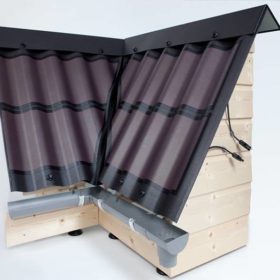
Solar foil for BIPV applications
HyET Solar and the Delft University of Technology are developing a photovoltaic foil technology that is claimed to be suitable for any type of surface. The solar foil has a 12.0% conversion efficiency and is based on hydrogenated amorphous silicon and nanocrystalline silicon in a tandem cell configuration.
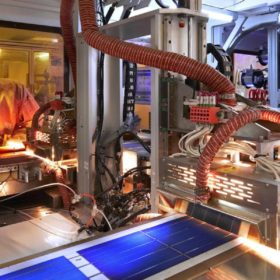
Chinese PV Industry Brief: Soaring profits for Trina and Shuangliang
Panel maker Trina Solar and wafer manufacturing compatriot Shuangliang Eco-Energy have announced bumper profits from last year as polysilicon producer GCL ponders a rebrand.
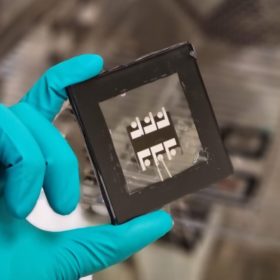
Damp heat–stable perovskite solar cell with 24.3% efficiency
Developed by scientists in Saudi Arabia, the perovskite cell was able to retain over 95% of its initial efficiency after 1,000 hours at damp-heat test conditions. The cell was fabricated with a substrate made of glass and indium tin oxide (ITO), 2D layers, a 3D perovskite layer, an electron-selective layer, a buffer layer based on bathocuproine (BCP), and silver metal contact.
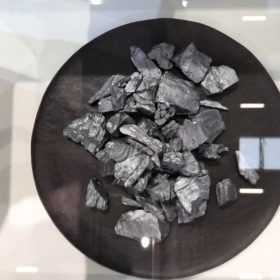
Polysilicon price reaches $39.3/kg — the highest since 2011
The price of polysilicon last week reached its highest level since 2011 and, according to Chinese module manufacturer JinkoSolar, there are no visible signs that it could drop this year, as predicted by several analysts.
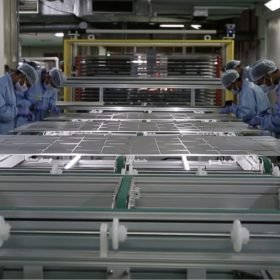
ICRA expects strong demand outlook for Indian solar manufacturers
As Indian solar manufacturers relying on imported cells remain exposed to price fluctuations, timely commissioning and ramp-up of ongoing capex in the module manufacturing value chain remain critical in the near to medium term.
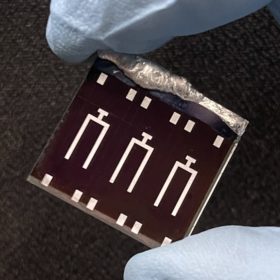
CISSe solar cell with record-breaking efficiency of 14.4%
Korean researchers have built a CISSe solar cell that can be used as a bottom cell for applications in tandem cells with a top cell based on perovskite. In the manufacturing process, they replaced the vacuum technology with air annealing and the result was a record-breaking efficiency combined with potential lower production costs.
