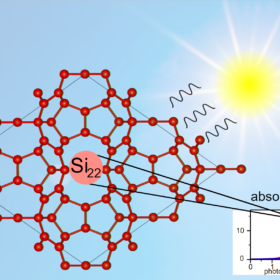
A whole new structure for silicon
Scientists in the United States theorized that a new allotrope of silicon – the same element arranged into a different atomic structure – could show greatly improved photovoltaic performance compared to that used in today’s solar cells. The allotrope, Si22, could also have important properties for use in quantum computing, carbon sequestration and other applications – though fabrication and actual physical testing of the material will be needed to back up the theoretical findings presented so far.
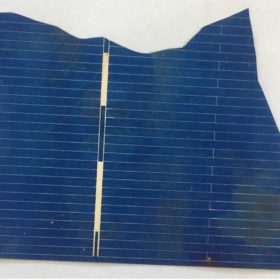
New tech to recover pure silicon from end-of-life solar cells
An Indian research group has used three different chemicals instead of commonly used hydrofluoric acid to separate silicon from the cell. The technique is claimed to be able to deliver recycled silicon with a purity of up to 99.9984%.
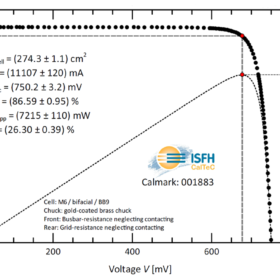
Longi improves efficiency of its heterojunction cell from 25.82 to 26.30% in just one week
The result was confirmed, once again, by Germany’s Institute for Solar Energy Research Hamelin (ISFH).
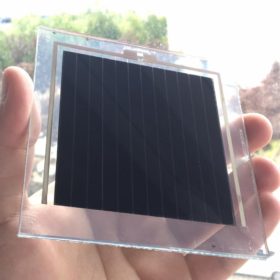
Perovskite solar cell with improved stability via graphite electrode
The solar cell was built on a fluorine-doped tin oxide substrate coated with titanium dioxide, an electron selective layer made of mesoporous titanium dioxide, a zirconium dioxide insulating spacer layer, and a graphite electrode. A mini-module fabricated with this cell passed, for the first time, a hotspot test.

Solaria announces initial favorable ruling in patent dispute with Canadian Solar
According to a statement released by the Californian manufacturer, the U.S. International Trade Commission (ITC) issued an initial determination finding that Canadian Solar may have violated two U.S. patents covering Solaria’s shingled photovoltaic panels.
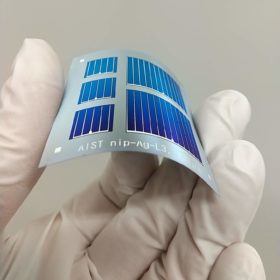
Japanese scientists build 23.27%-efficient heterojunction solar cell with 56.2μm-thick wafer
The 4cm2 cell showed a remarkable open-circuit voltage of 754 mV. It was fabricated with a hydrogenated nanocrystalline silicon (nc-Si:H) layer, which is said to show lower parasitic absorption and higher external quantum efficiency.
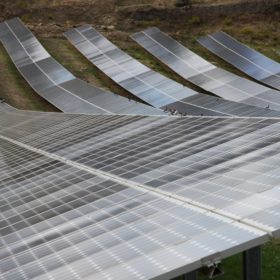
Chinese PV Industry Brief: Government confirms plan to install 1.2 TW of renewables by 2030
Elsewhere, cell maker Aikosolar has announced two major wafer purchase agreements with manufacturers Shuangliang and Shangji, and Zhonghuan Semiconductor has reported solid financials for the third quarter.
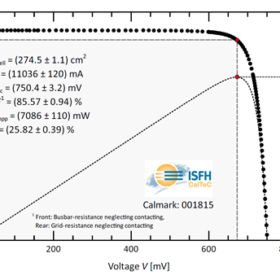
Longi achieves 25.82% efficiency for heterojunction solar cell
The result, confirmed by Germany’s Institute for Solar Energy Research Hamelin (ISFH), was achieved on a heterojunction solar cell based on an M6 wafer.

Solar panels blasted with sound to better understand microcracking
Researchers at NREL and EPRI focused heavy bass sounds on solar panels to simulate the effects of wind-caused deflection.
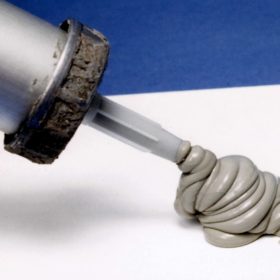
Flowable silicone sealant to repair damaged solar module backsheets
The special sealant is based on a product developed by U.S.-based Dow Corning for solar panel frame sealing. Its creators claim the new solution is able to make damaged panels recover high insulation resistance and operate normally.
